Heritage travel
Calabrian heritage trip for women
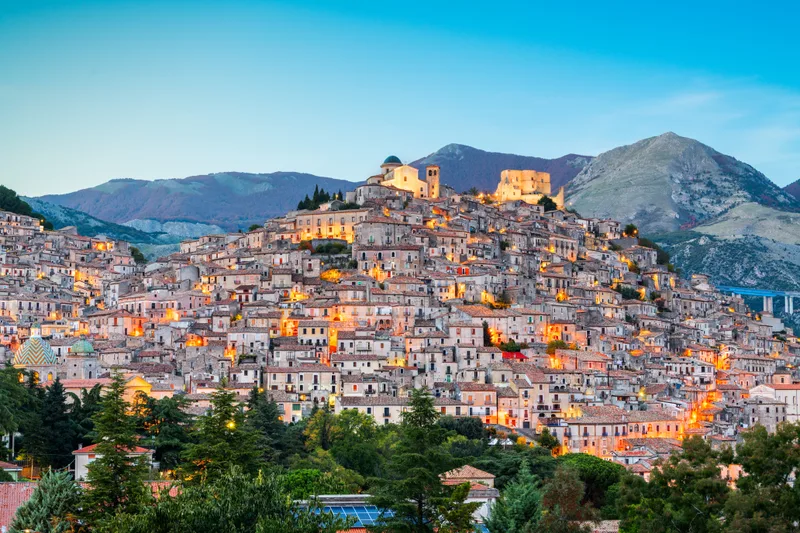
A Calabrian heritage trip for women usually begins with one name: the village a grandparent or great-grandparent left. The hosted week in Tropea is not a genealogy tour, but it puts you on Calabria's Tyrrhenian coast for 6 to 7 days, and a visit to an ancestral town can be raised in your private inquiry as a private request, arranged outside the included program. Do the records work before you fly, so you arrive knowing which comune you are looking for.
Why so many American families trace back to Calabria
Because the region emptied out in waves. Between 1876 and 1915 about 879,000 people emigrated from Calabria, and more than 427,000 of them went to the United States, most between 1901 and 1914. Over the full century from 1876 to 1976, close to two million Calabrians left, a number not far from the region's population today.
In the great-migration years the province of Cosenza sent the most people, about 373,000, followed by Catanzaro with about 326,000 and Reggio Calabria with about 200,000. One detail trips up a lot of family research: Tropea and the towns around it were then part of the province of Catanzaro. The province of Vibo Valentia was only created by a 1992 law that took effect in 1996, so an old document that says "Catanzaro" may point to a village near Tropea.
Find the comune before you book anything
The village name is the key, and American paperwork often gives only the province or a garbled spelling. Work from both ends:
- U.S. arrival records. The Statue of Liberty-Ellis Island Foundation's free passenger search covers arrivals at the Port of New York from 1820 to 1957; manifests from the Ellis Island years often record a last place of residence.
- Italian civil records. Italy's Ministry of Culture publishes digitized civil registers from state archives on the Portale Antenati. For Calabria, birth, marriage and death registers from 1809 onward survive for many towns.
- Spelling drift. Surnames and village names shift between Italian registers, ship manifests and American documents. Search variants, and dialect forms.
- Albanian-sounding names. If the surname or the village sounds Albanian, the family may be Arbëreshë, from communities founded by Albanian settlers who arrived in the 15th and 16th centuries. Most of Calabria's Arbëreshë towns are in the province of Cosenza, with a few in Catanzaro and Crotone.
How far the village is likely to be from Tropea
Distance decides whether a visit takes a morning or the whole day. Calabria is long and mountainous, and road times matter more than kilometers.
| Where the family comes from | Rough distance by road | What a visit means |
|---|---|---|
| Pizzo and the coast north of Tropea | About 30 km to Pizzo, roughly half an hour | A morning or an afternoon; Pizzo itself features on the week's coast day |
| Reggio Calabria and its province | About 100 km to Reggio, around an hour and a half | Most of a day |
| Cosenza province, including Arbëreshë towns | Often well over 100 km, close to two hours each way | A full day |
| Anywhere else in Calabria | Check the drive on a map before you inquire | Road time, not kilometers, decides how much of the day it takes |
How an ancestral visit fits the hosted week
As a private request, raised early. The week is anchored in one boutique property overlooking the Tyrrhenian Sea, with private transport throughout and a loose shape that leaves Day V open. A trip to your family's town is not part of the included program and is not in the price; private requests and services outside the program can be coordinated on request.
So name the comune in your private inquiry, along with what you hope to do there: walk the main street, see the church, find a house. The week does not include genealogy research, so bring what you have found already: names, dates, copies of records, a street if you have one. Manuela, the founder, was born and raised in Italy and Calabria is home.
What the coastal week adds for a descendant
The parts of Calabria a records search can't give you. A hands-on Calabrian cooking class with a local chef, where a grandmother's dish may turn out to have a name and a place. Long dinners at selected restaurants, a vineyard evening inland, a day on the water along the Costa degli Dei. For context on the region's customs, read Calabrian culture and traditions.
If Italian citizenship by descent is part of your plan, note that Italy narrowed the rules in 2025 with Law 74/2025. That process starts with an Italian consulate, not with a trip.
Reserve your place
Send a private inquiry
Every inquiry is reviewed personally and answered within 48 hours. Exact dates are shared in the reply.
Questions
Can the host research my family tree?
No. The hosted week doesn't include genealogy research. Start with the Portale Antenati, FamilySearch and the Ellis Island passenger search, or hire a professional genealogist, and use how to trace your Calabrian ancestry as a guide.
My documents say the family came from Catanzaro. Is that near Tropea?
Possibly closer than you think. Until the mid-1990s Catanzaro province covered the area that is now the province of Vibo Valentia, including Tropea, so "Catanzaro" on an old record may mean a village anywhere in that wider territory. The civil records will name the actual comune.
Can my mother or a cousin come on the same stay?
Yes. Each woman is one of the 6 to 8 in the group and has her own room, and the price is per woman, from $5,000. Mention that you are traveling together in the inquiry.
Does visiting my ancestral town help with citizenship?
No. Recognition of citizenship by descent depends on documents and on the law, which changed in 2025 (Law 74/2025), not on visiting. Ask the Italian consulate that covers where you live.
Sources and further reading
- ICSAIC: Calabrian emigration abroad, 1876 to 1976
- Wikipedia: Province of Vibo Valentia
- Statue of Liberty-Ellis Island Foundation: Passenger search
Checked November 19, 2026. Timetables, prices and opening hours change; confirm before you travel.
Keep reading
Related guides