Second-trip Italy
Italy beyond Rome, Florence and Venice
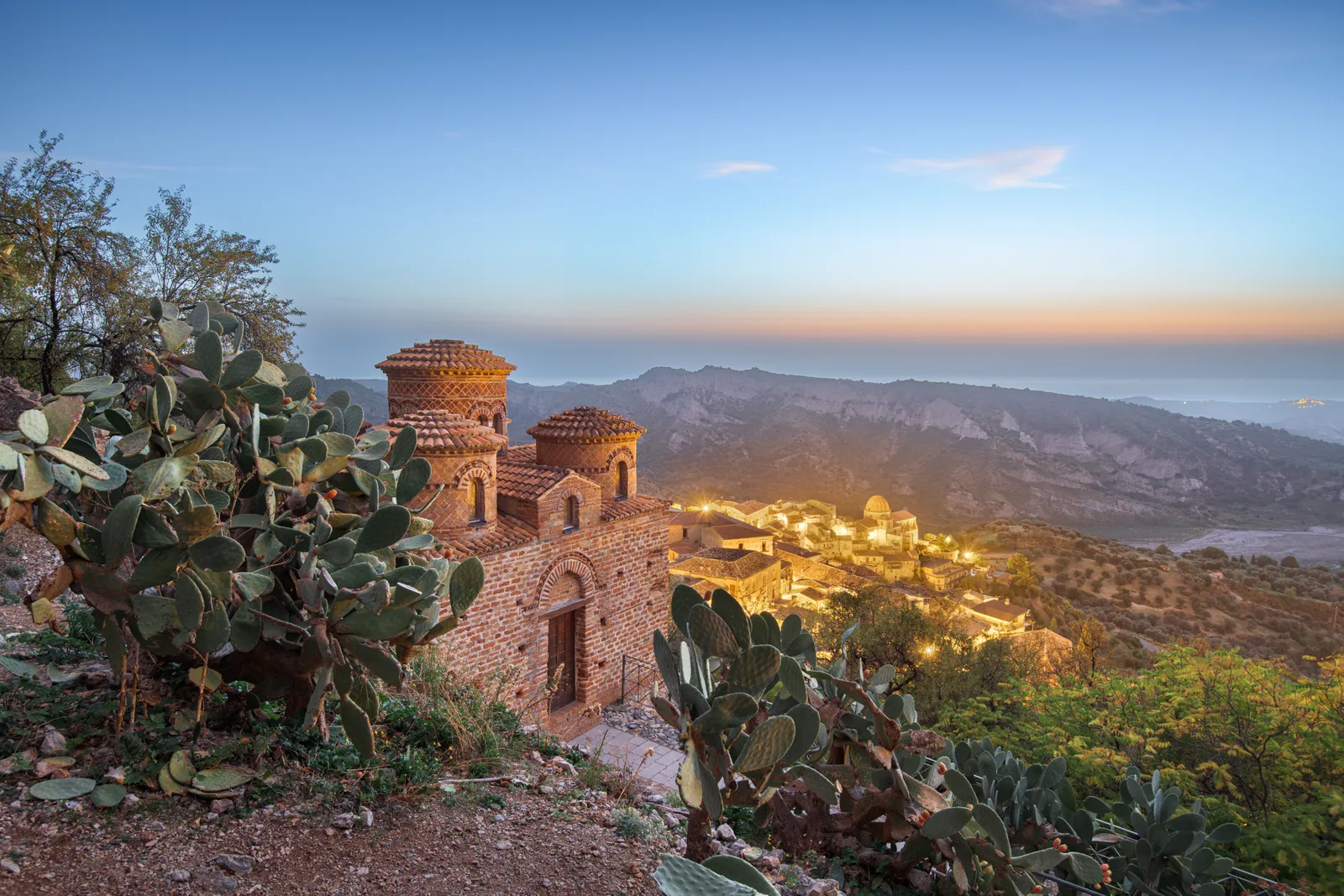
Beyond Rome, Florence and Venice, the South gives you the same depth of history and food with a fraction of the visitors: Naples and Cilento, Puglia's trulli and baroque Lecce, Matera's cave city, Sicily's temples and volcano, and Calabria's coast. In 2024 the three classic cities logged about 65 million overnight stays, eight times as many as all of Calabria. A good second trip trades three cities for one region and a single base.
Why do so many travelers look past the big three?
Because the pressure on them is now regulated, not just felt. Venice began charging day-trippers a €5 access fee on 25 April 2024, rising to €10 in 2025 for visitors who did not register at least four days ahead. The fee applied on 54 days in 2025 and 60 in 2026. Since 2024 the city has also capped guided groups at 25 people and banned loudspeakers. Estimates of Venice's annual visitors run from 22 to 30 million, against fewer than 50,000 residents in the historic island city.
Florence has moved to stop new short-term rentals in its UNESCO-listed historic center, where housing for residents has become hard to find. Rome alone recorded 42.7 million overnight stays in 2024, according to ISTAT, nearly as many as Puglia, Sicily and Calabria combined. None of this means the classics are not worth seeing. It means a second trip can buy you space that a first one could not.
The classic cities and four southern regions by the numbers
Overnight stays are the cleanest measure of how busy a place feels after the day-trippers leave. City and region figures are mixed below, which only sharpens the point: a single city like Venice outweighs Calabria by more than half again.
| Place | Overnight stays, 2024 | Main gateway | What draws people | Pace |
|---|---|---|---|---|
| Rome | 42.7 million | Rome Fiumicino | Ancient Rome, the Vatican | Fast and urban |
| Venice | 13.3 million | Venice Marco Polo | Canals, day-tripper fee on peak days | Crowded at midday |
| Florence | 9.2 million | Florence or Pisa | Renaissance art and architecture | Dense and walkable |
| Campania | 21.4 million | Naples, busiest airport in Southern Italy | Naples, Pompeii, Amalfi, Cilento | Busy coast, slower interior |
| Puglia | 17.9 million | Bari and Brindisi | Trulli, Castel del Monte, Lecce | Towns and olive country |
| Sicily | 17.3 million | Catania and Palermo | Seven UNESCO sites, Mount Etna | Large island, needs time |
| Calabria | 8.1 million | Lamezia Terme | Coast, mountains, the Riace Bronzes | The quietest of the four |
Where does the South match what you loved about the classics?
Almost point for point, if you know where to look. The South holds Italy's oldest Greek and Roman layers, its most theatrical baroque, and two places as singular as Venice.
- If you loved ancient Rome: Pompeii and Herculaneum (UNESCO, 1997), the Greek temples of Paestum in Cilento (1998), Agrigento's Valley of the Temples in Sicily (1997), and the Riace Bronzes, Greek warriors cast around 460 to 430 BCE, in Reggio Calabria's Museo Nazionale della Magna Grecia.
- If you loved Florence's churches and palaces: the late baroque towns of Sicily's Val di Noto (2002), Palermo's Arab-Norman churches with the cathedrals of Cefalù and Monreale (2015), and Lecce's baroque, which sits on UNESCO's tentative list with the Salento.
- If you loved Venice for being unlike anywhere else: Matera's Sassi, a city carved into rock, listed in 1993 and European Capital of Culture in 2019, or the seven Aeolian Islands off Sicily, listed in 2000.
- If you loved Rome's street life: the historic center of Naples, a World Heritage Site since 1995.
What changes when you travel south of Naples?
Mainly logistics: the fast trains thin out and distances stretch. Frecciarossa trains reach Naples and Salerno and run down the Adriatic to Bari and Lecce. A few reach Calabria's main-line stations such as Lamezia Terme, but smaller coastal towns depend on regional trains, and Sicily adds a ferry crossing to any rail journey. Tropea, for example, is served by regional trains from Lamezia Terme, with direct InterCity trains to Rome only in summer.
Driving solves the distances but brings its own rules. About 350 Italian towns have a ZTL, a limited traffic zone in the historic center, and unauthorized entry costs €83 to €332, with notices that can reach a rental-car driver months later. Many towns also add a nightly tourist tax, set by each comune within national limits and collected by your hotel. For the language question, see do people speak English in Calabria.
How should you structure a second trip to Italy?
Pick one region, sleep in one or two places, and give it at least a week. The first trip to Italy is usually a sequence of train stations: three cities, three hotels, a day lost to each move. A second trip works better the other way round. Base yourself somewhere with the sea or the countryside on the doorstep and let the days radiate out, so the region starts to feel familiar by day four.
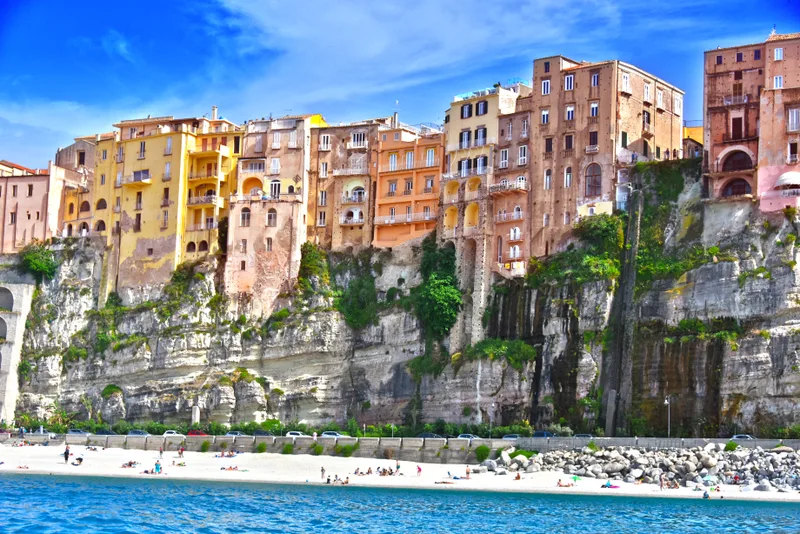
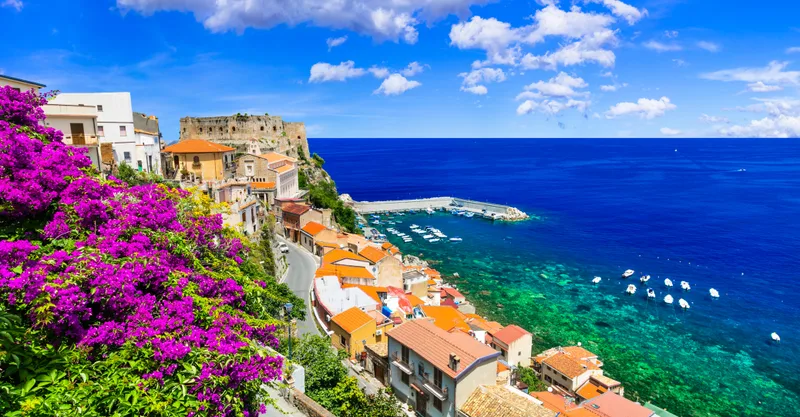
Puglia suits a road trip between Ostuni, Alberobello and Lecce. Sicily rewards two bases, east and west, because of its size. Calabria works from a single coastal base such as Tropea, where the Costa degli Dei, Pizzo and Capo Vaticano are all close. If seven days sounds short, read is one week enough for Italy, and for the region itself, is Calabria worth visiting.
Stay with the classics if, go beyond them if
- Stay with Rome, Florence and Venice if this is your first time in Italy, the art and architecture are the point of the trip, and you want fast trains between every stop.
- Go beyond them if you have already stood in the Sistine Chapel queue, you want to swim as well as sightsee, you prefer one region in depth to three cities in passing, and you want restaurants where the menu changes with what the boats brought in.
- Split the difference if you have two weeks: a few nights in one classic city, then a week in the South.
Is a hosted week right for you?
Five questions, one minute
Hear when 2027 dates open
One email when 2027 dates open, and an occasional letter from Calabria. Unsubscribe any time.
Questions
What is the least crowded region of Southern Italy?
Of the four big southern regions, Calabria. ISTAT recorded about 8.1 million overnight stays there in 2024, against 17.3 million in Sicily, 17.9 million in Puglia and 21.4 million in Campania. Its busiest weeks are still in August.
Is Southern Italy good for a second trip to Italy?
Yes, especially if your first trip was city-heavy. The South pairs serious history, from Paestum to the Riace Bronzes, with beaches and a slower daily rhythm, and it rewards staying in one place rather than moving every two nights.
Can you reach the South easily from Rome?
Naples is a short Frecciarossa ride from Rome, and Bari and Lecce are on the Frecciarossa route down the Adriatic. Calabria and Sicily take longer by train, so many travelers fly into Lamezia Terme, Catania or Palermo instead.
Is it better to drive or take the train in Southern Italy?
It depends on the region. Puglia and Sicily are easiest by car, while a single coastal base in Calabria can work with trains and a private driver. If you drive, learn the ZTL signs before you arrive.
Sources and further reading
- Tourism in Italy (Wikipedia, ISTAT 2024 overnight stays)
- Tourism in Venice (Wikipedia)
- List of World Heritage Sites in Italy (Wikipedia)
- Limited traffic zone (Wikipedia)
- Matera (Wikipedia)
Checked November 19, 2026. Timetables, prices and opening hours change; confirm before you travel.
Keep reading
Related guides