Southern Italy shortlist
Alternatives to the Amalfi Coast
The strongest alternatives to the Amalfi Coast are the Cilento coast just south of Salerno, Maratea in Basilicata, Tropea and the Costa degli Dei in Calabria, Scilla on the Strait of Messina, the island of Procida off Naples, Sperlonga between Rome and Naples, and Polignano a Mare in Puglia. Each pairs a town on the water with cliffs or coves and fewer crowds, and four of them sit on or near the coastal railway south of Salerno.
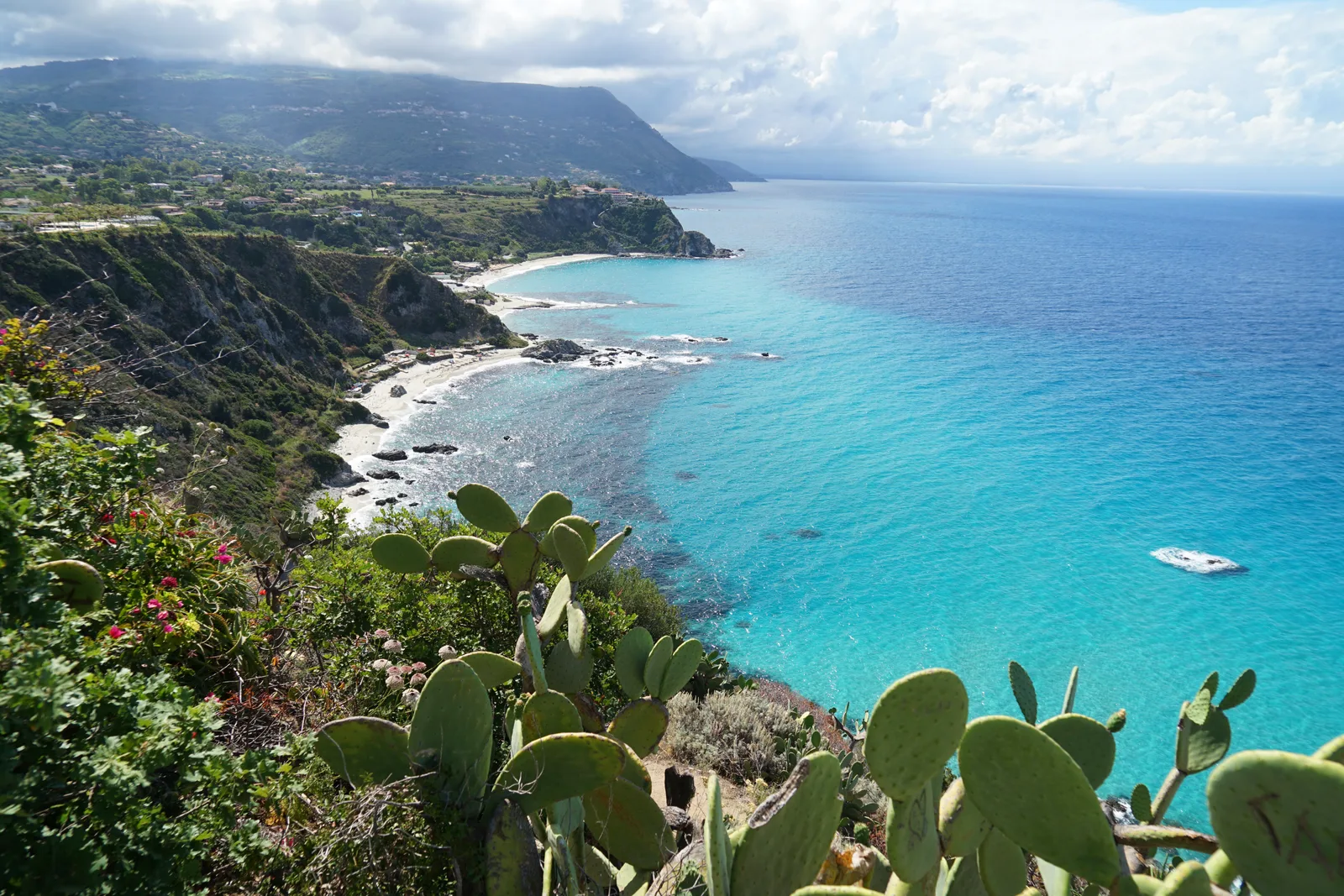
Seven places to go instead of the Amalfi Coast, one line each
Every place below is a real coastal town or stretch with its own character, not a copy of Positano. Read the one line, then use the table to check access.
- Cilento coast (Campania): villages such as Santa Maria di Castellabate and Palinuro inside a national park that UNESCO listed in 1998 with the Greek temples of Paestum and Velia.
- Maratea (Basilicata): the region's only town on the Tyrrhenian, with about 32 km of rocky shore, more than twenty beaches and a marble Christ the Redeemer on Monte San Biagio.
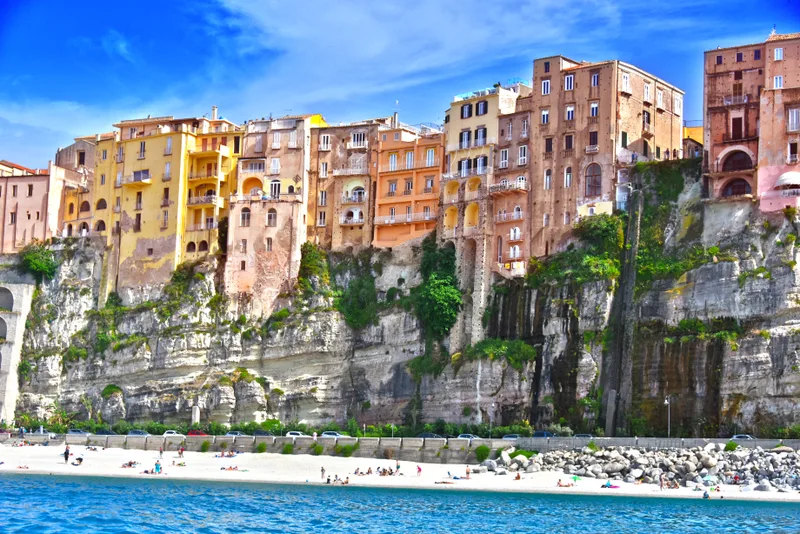
- Tropea and the Costa degli Dei (Calabria): a clifftop old town above sandy beaches on a 55 km coast that faces the Aeolian Islands, voted Italy's Borgo dei Borghi in 2021.
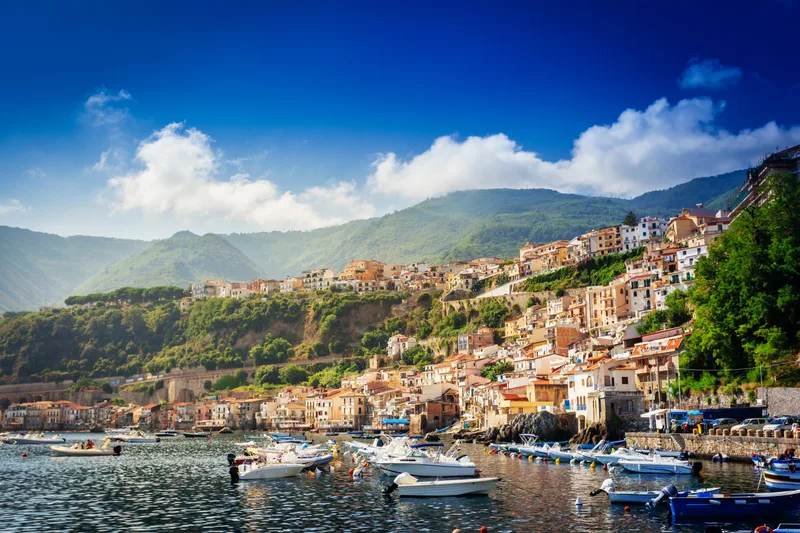
- Scilla and Chianalea (Calabria): a castle on the rock of the Scylla myth and a fishing quarter built at the water's edge, about 22 km from Reggio Calabria.
- Procida (Campania): one of the Phlegraean Islands off Naples, Italy's Capital of Culture for 2022 and the setting for Il Postino and The Talented Mr. Ripley.
- Sperlonga (Lazio): a small coastal town roughly midway between Rome and Naples, with a long sandy beach and the sea grotto of the Villa of Tiberius.
- Polignano a Mare (Puglia): an old town on a rocky spur hanging over the Adriatic, with the Lama Monachile inlet and beach beside it and Bari's airport nearby.
How the alternatives compare on access, sea and style
Access decides most trips, so the table leads with the nearest station or airport. All seven are on the Tyrrhenian except Polignano, which faces the Adriatic.
| Place | Region | Nearest rail or air link | Shoreline | Best for |
|---|---|---|---|---|
| Cilento coast | Campania | Agropoli-Castellabate and Pisciotta-Palinuro stations | Beaches and coves inside a national park | Ruins plus swimming |
| Maratea | Basilicata | Maratea station; Salerno airport about 139 km | Rocky coast, 20+ small beaches | Quiet heights and walks |
| Tropea and Costa degli Dei | Calabria | Tropea station; Lamezia Terme airport about an hour by car | Sandy beaches under the cliff | A full week from one base |
| Scilla and Chianalea | Calabria | Scilla station; Reggio Calabria about 22 km | Town beach below the castle | Fish, castle and a short stay |
| Procida | Campania | By boat from the Naples area | Small harbors and island beaches | A car-free island break |
| Sperlonga | Lazio | Fondi-Sperlonga station on a Rome to Naples line | Long sandy beach to the west | An easy add-on from Rome |
| Polignano a Mare | Puglia | Polignano a Mare station; Bari airport | Rocky spur and a beach in a deep inlet | Adriatic drama and Puglia towns |
Which alternatives feel closest to the Amalfi Coast?
Cilento and Maratea, because they share the same Tyrrhenian geography of mountains falling into the sea. Cilento starts just south of Salerno and runs to near Sapri, and its seaside names, from Santa Maria di Castellabate to Acciaroli, Palinuro and Marina di Camerota, are mostly hamlets of hill towns inland. Castellabate is known across Italy as the setting of the film Benvenuti al Sud. The draw here is the mix: Paestum's Greek temples and Velia, home of the Eleatic philosophers, within reach of a swim.
Maratea is smaller and steeper. The old town climbs the northern slopes of Monte San Biagio, the Christ the Redeemer statue on its summit was carved from Carrara marble in 1965, and it is known as the town of 44 churches. If what you loved about the Amalfi Coast was Ravello's height and calm, Maratea is the closest match on this list.
Which alternatives work without a car?
Most of them, thanks to one railway. The Salerno to Reggio Calabria line runs 393 km down the Tyrrhenian, mostly close to the shore, with stations at Agropoli-Castellabate, Vallo della Lucania, Pisciotta-Palinuro, Sapri, Maratea, Paola and Lamezia Terme Centrale. From Lamezia, regional trains on the old coastal line serve Pizzo, Tropea and Nicotera, and in summer a few InterCity trains run straight from Tropea to Rome.
Sperlonga is reached from Fondi-Sperlonga station, with the last few kilometers by road, and Polignano a Mare has its own station, served from Bari. Procida needs a boat but rewards you with an island small enough to walk. Scilla also has a stop on the same Tyrrhenian line, served by Reggio Calabria's suburban trains. A car still helps in Cilento, where many beaches sit below hill villages rather than beside the tracks.
Which alternative suits a full week rather than a night or two?
Tropea and the Costa degli Dei, or Puglia's coast if you prefer the Adriatic. A week needs variety within an hour of your bed, and the Costa degli Dei supplies it: Pizzo and its castle at one end, Capo Vaticano's coves at the other, and the Aeolian Islands on the horizon. The Tropea and Costa degli Dei hub and day trips from Tropea show how the days fill.
In Puglia, Polignano a Mare works as a base for the towns around it: the trulli of Alberobello, a UNESCO site since 1996, and Ostuni, the White Town, which sits on a hill about 8 km from the sea. Scilla, Procida and Sperlonga are better as two or three nights inside a longer route. If you are weighing the two regions as a whole, Calabria vs Puglia sets them side by side.
Pick by what you wanted from the Amalfi Coast
- A town stacked above the sea: Tropea or Polignano a Mare.
- Height, quiet and views from above: Maratea.
- Ancient ruins with your beach days: the Cilento coast, for Paestum and Velia.
- Days on a boat: Tropea, with the Aeolian Islands in sight, or Procida, which is itself an island.
- A fishing village where the houses meet the water: Scilla's Chianalea quarter.
- Something easy to add to Rome: Sperlonga, on the way to Naples.
Is a hosted week right for you?
Five questions, one minute
Hear when 2027 dates open
One email when 2027 dates open, and an occasional letter from Calabria. Unsubscribe any time.
Questions
What is the closest alternative to the Amalfi Coast?
Geographically, the Cilento coast, which begins just south of Salerno. In feel, Maratea is closest for its height and calm, while Tropea is closest for a town perched directly above the beach.
Is Cilento less crowded than the Amalfi Coast?
Its coastal villages are spread over a far longer shoreline inside a national park, so the pressure is less concentrated than on the Amalfi Coast's single road. August is still busy with Italian holidaymakers, so book early for that month.
Can you reach these alternatives from Naples?
Several, yes. Procida is reached by boat from the Naples area, and trains run south from Salerno to the Cilento stations, Maratea and on into Calabria. Sperlonga sits between Rome and Naples on a mainline route.
Which alternative has the best sandy beaches?
Tropea and Sperlonga. Tropea's beaches are sand directly under the old town, and Sperlonga has a long sandy beach running west toward Terracina. Maratea's shore is rocky, and Polignano's beach sits in a narrow inlet.
Sources and further reading
- Cilento (Wikipedia)
- Maratea (Wikipedia)
- Salerno to Reggio Calabria railway (Wikipedia)
- Sperlonga (Wikipedia)
- Euronews: Pass on Positano, Italian destination dupes
Checked November 19, 2026. Timetables, prices and opening hours change; confirm before you travel.
Keep reading
Related guides