Strait of Messina guide
Scilla and Chianalea travel guide
Scilla is a fishing town of about 4,900 people at the northern mouth of the Strait of Messina, 22 km north of Reggio Calabria and roughly 1 hour 15 minutes to 1 hour 30 minutes by car from Tropea. It splits into three parts: Chianalea, the old fishermen's quarter whose houses rise straight from the water; Marina Grande, the beach; and San Giorgio, the upper town. Castello Ruffo holds the rock between them, the rock where myth placed the monster Scylla. Give it a long half day and finish with swordfish by the water.
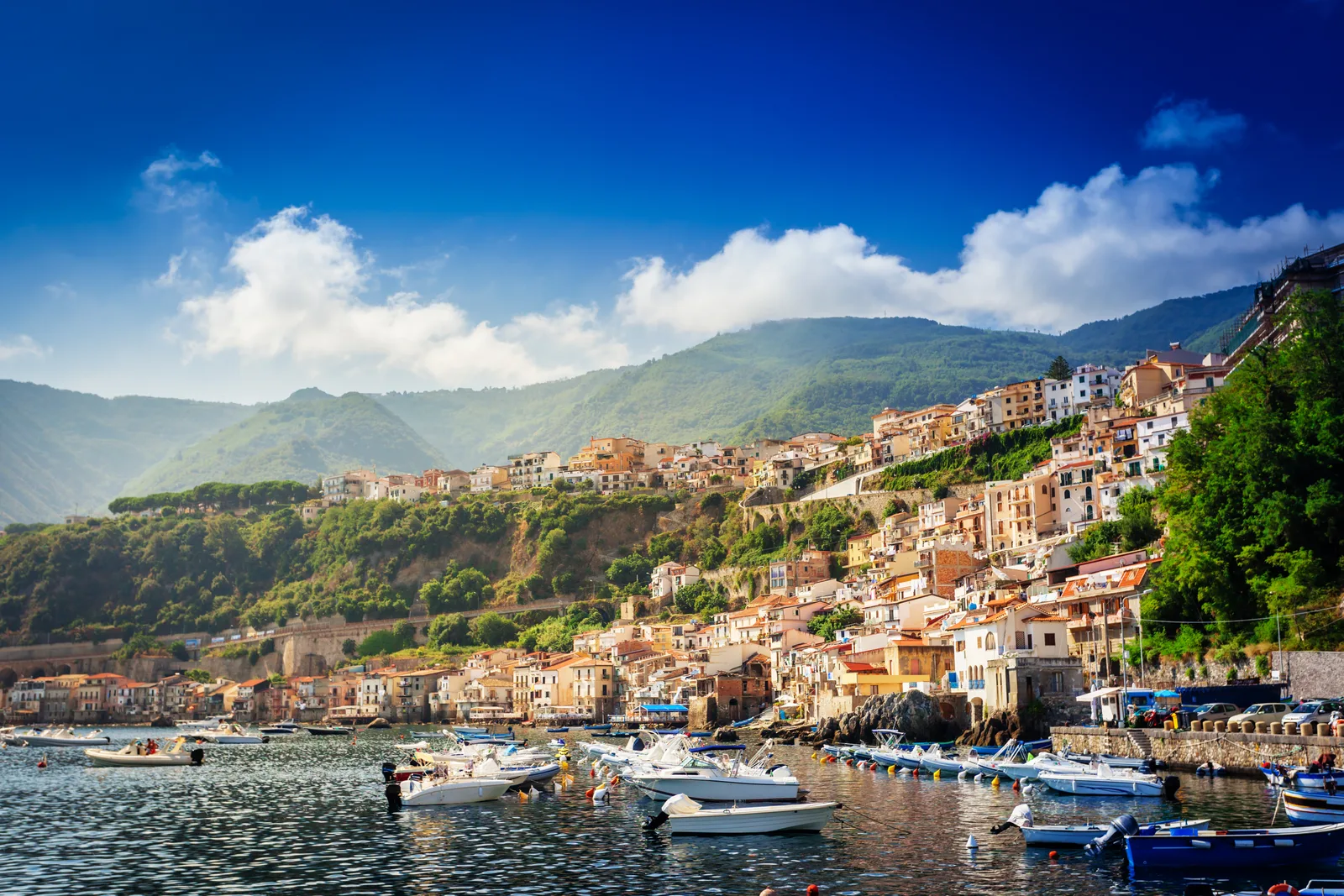
Scilla is three neighborhoods wrapped around one rock
Scilla is built around a single promontory, and each side of it feels like a different town. Castello Ruffo stands on the rock itself. On one side is Marina Grande, the long beach framed by two rock ridges. On the other is Chianalea, the fishermen's quarter. Above both sits San Giorgio, the historic upper town, built around Piazza San Rocco with the town hall, the church of San Rocco and a terrace that looks straight down the Strait of Messina.
Knowing the layout saves you climbing. Most visitors drop down to Chianalea first, then walk past the port and up to the castle, and only later head to San Giorgio for the view.
| Part | What it is | Go for |
|---|---|---|
| Chianalea | The old fishermen's quarter, houses built almost against the sea, only a few meters of rocky shore | The lanes, the boats, a meal over the water |
| Marina Grande | The beach district between two rock ridges, with the 16th-century church of Spirito Santo | Swimming and the classic view of the castle |
| San Giorgio | The upper historic center around Piazza San Rocco, including the old Bastia quarter | Town life and the terrace over the strait |
| Castello Ruffo | Fortress on the promontory, crowned by a working lighthouse | History, exhibitions and the panorama |
Chianalea is the quarter where houses stand in the sea
Chianalea is the reason most people come to Scilla: a lane of stone houses whose foundations sit in the water. Italians call it a little Venice of the South, which oversells the canals (there are none) but captures how the sea laps at back doors and how boats tie up beneath balconies.
The quarter has almost no beach, mostly rock, and a single road links it to the port and the coastal SS18 highway. That makes it a place for walking. Come in from the port end, follow the main lane, and step down the side passages to the small landings where the water reaches the steps. Late afternoon is the best time, when the light comes low across the strait and the tables start filling for dinner.
Chianalea is part of Scilla, not a separate village, so you will see it signposted both ways. Compare it with other Calabrian borghi in the guide to the most beautiful villages in Calabria.
Castello Ruffo has watched the strait since 493 BC
The fortress on Scilla's rock began as a Greek stronghold: in 493 BC Anaxilas, tyrant of Rhegion (ancient Reggio), fortified the height against Etruscan pirates. Pliny the Elder knew the site as Oppidum Scyllaeum, and Octavian later had it strengthened again.
In 1543 Paolo Ruffo bought the castle and restored the baronial palace, and in 1578 the Ruffo family gained the title of princes, which is why the castle still carries their name. The 1908 earthquake destroyed much of the structure. In 1913 the upper part was given over to a lighthouse, a small white tower on a black base that the Italian Navy still operates for ships entering the strait from the north.
For about thirty years the castle was a youth hostel. Today it houses Calabria's regional center for the restoration of historic towns and hosts exhibitions and conferences, so what you can enter depends on what is on. The walk up from the port is short, and the view down onto both Chianalea and Marina Grande is the best in town.
The town takes its name from a sea monster in Greek myth
Scilla is named after Scylla, the monster that seized sailors from passing ships in the Odyssey. In the version told here, Scylla was a young nymph who refused the love of the sea god Glaucus. The sorceress Circe poisoned the pool where she bathed and turned her into a monster that lived in the rock under the castle. Across the narrows waited Charybdis, the whirlpool, and Odysseus had to pass between the two.
The myth grew out of real water. The currents of the strait are strong enough that Marina Grande is described as the first place north of Reggio where the sea is not cooled by them. On a clear day you can see Sicily across the strait and, farther out to sea, the cone of Stromboli.
Swordfish is the dish, and the passerella is the boat to look for
Scilla's signature food is pesce spada, swordfish, hunted in the Strait of Messina with a harpoon method that has changed little in more than two thousand years: spot the fish, chase it or wait for it, throw the harpoon. The old boats were luntri, small keelless rowing boats of about 5 to 7 meters with five oarsmen and a harpooner, and the best were built in Scilla and in Bagnara just up the coast. One man climbed a mast to watch for fish.
The modern version is the passerella: a motorboat with a very long gangway projecting over the bow, where the harpooner stands, and a tall central tower with a lookout at the top. If you see one moored in the harbor, that strange silhouette is the reason.
On menus, look for swordfish grilled or rolled into involtini. For more of the coast's fish dishes, see Calabrian seafood dishes.
How to get to Scilla from Tropea, and how long to stay
Scilla is about 85 km south of Tropea, roughly 1 hour 15 minutes to 1 hour 30 minutes by car, almost all of it on the A2 motorway. The train is possible too: Scilla has its own station on the main line to Reggio Calabria, as does Favazzina just to the north, but journeys from Tropea vary and some need a change, so check Trenitalia first. The guide to trains in Calabria explains the lines.
- Pair Scilla with the city using the Reggio Calabria travel guide.
- For a longer drive that strings this coast together, see the Calabria road trip itinerary.
| Plan | Time on site | What it covers |
|---|---|---|
| Quick stop | 2 to 3 hours | Chianalea, the castle viewpoint, a coffee by the port |
| Long half day | 4 to 5 hours | All three districts, plus lunch or dinner over the water |
| Full day | 6 to 8 hours | Scilla plus Reggio's museum and seafront, about 25 minutes south |
Planning Calabria?
Hear when 2027 dates open
A small group of women, one week in Tropea, everything arranged. Join the list for first word on dates and an occasional letter from Calabria.
One email when 2027 dates open, and an occasional letter from Calabria. Unsubscribe any time.
Questions
Can you swim at Scilla?
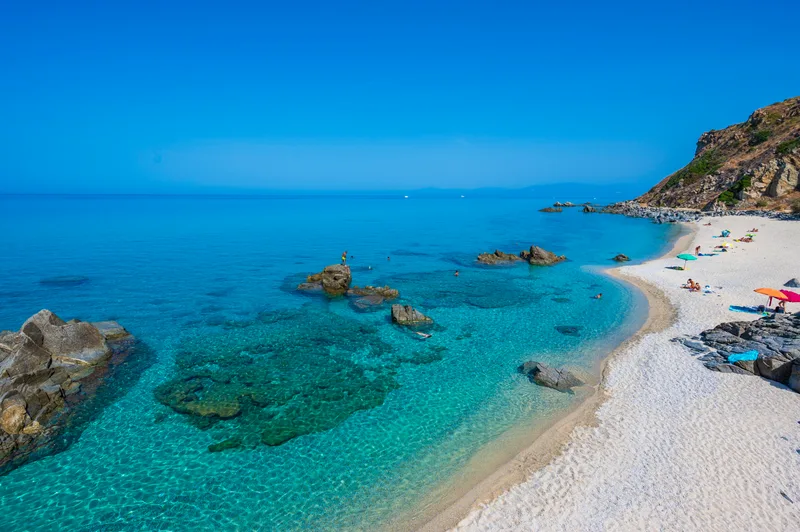
Yes. Marina Grande is the town's swimming beach, a long stretch below the castle between two rock ridges. Chianalea has only a few meters of rocky shore, so swimmers there go in from rocks and landings.
Should you see Scilla and Reggio on the same day?
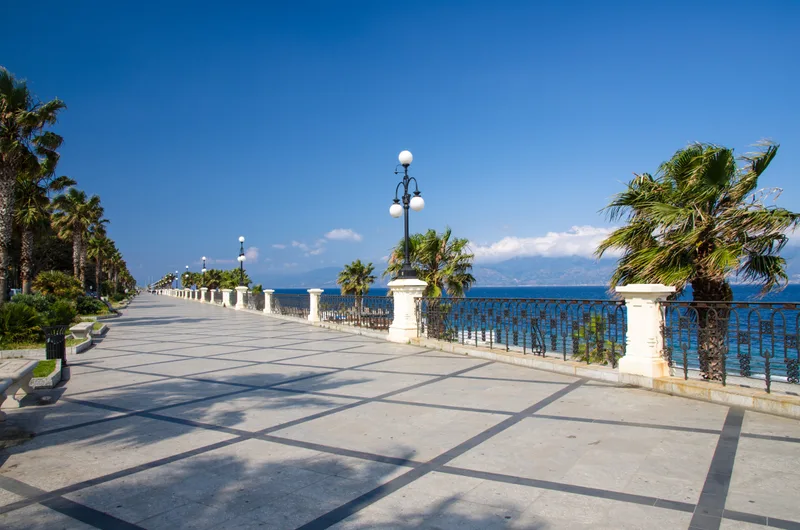
Yes, if you start early. They are only 22 km apart, so you can spend the morning in Reggio's museum, walk the lungomare, and drive north to Scilla for Chianalea in the late afternoon and dinner by the water.
What is the difference between Scilla and Chianalea?
Chianalea is part of Scilla: its old fishing quarter on the water beside the castle rock. The town also includes Marina Grande, the beach district, and San Giorgio, the upper town around Piazza San Rocco.
Can you go inside Castello Ruffo?
Often, but it depends on what is on. The castle houses a regional center for historic towns and hosts exhibitions and conferences, while the lighthouse at the top is still active and run by the Italian Navy. Check locally for current opening times.
Sources and further reading
- Wikipedia: Scilla, Calabria
- Wikipedia (Italian): Scilla
- Wikipedia (Italian): Castello Ruffo (Scilla)
- Wikipedia (Italian): Pesca del pesce spada
Checked November 19, 2026. Timetables, prices and opening hours change; confirm before you travel.
Keep reading
Related guides