Hosted week: the kitchen
Calabrian cooking class with a local chef
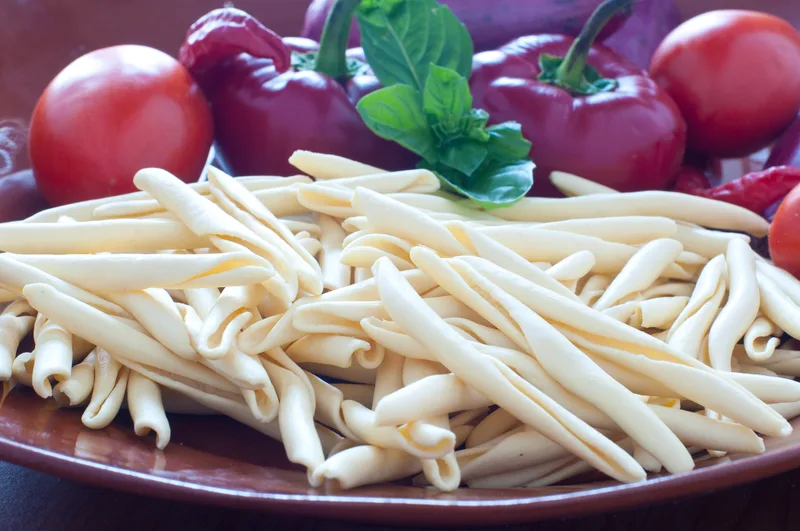
A Calabrian cooking class with a local chef teaches the region's home cooking through your own hands: the feel of the dough, the balance of the sauce, the timing. Cooking around Tropea rests on a few specific things, including fileja pasta rolled around a thin rod, 'nduja from Spilinga, the sweet red onion of Tropea, chili, and vegetables kept under olive oil. A hands-on class with a local chef is one of the experiences included in the hosted week in Tropea.
What Calabrian home cooking is built on
Calabrian food reflects the lives of farmers, shepherds and fishermen, and much of it was made to keep. Calabrians have traditionally preserved vegetables and meats under olive oil more than most Italian regions, and Calabria is Italy's second-largest olive oil producer. Pork, eggplant, chili and bread do much of the work.
| Ingredient | Where it comes from | How cooks use it |
|---|---|---|
| 'Nduja | Spilinga, province of Vibo Valentia | Scooped from its casing and spread on bread, or melted into tomato sauce for pasta |
| Cipolla Rossa di Tropea | The Tyrrhenian coast, mainly between Briatico and Capo Vaticano | Raw, cooked with potatoes, or turned into jam |
| Peperoncino | Grown across the region | Fresh and dried, in sauces, preserves and salumi |
| Eggplant | Grown across Calabria | Parmigiana, or fried into vrasciuli |
| Caciocavallo and pecorino | The Sila and the Crotone area | Grated over pasta or baked into festive dishes |
| Olive oil | The whole region (Olio di Calabria IGP) | For cooking, and for keeping vegetables in jars |
Fileja is the pasta of the province of Vibo Valentia
Fileja belongs to this province. The dough is durum wheat semolina, water and a pinch of salt, no eggs, rested for at least half an hour, then rolled into thin ropes and wrapped around a rod so each piece becomes a hollow twist about 20 cm long. The rod has its own local names, dinaciulu, danaco or dinacolo, and a thin skewer, a knitting needle or a cut metal coat hanger stands in at home.
Local names for the pasta include filateddhi, maccarruna i casa and maccaruni aru ferru. Fileja is traditionally the pasta for Sundays and holidays, served with a sauce of minced pork, a plain tomato sauce or one spiked with 'nduja. The skill lives in the hands, and the first few always come out uneven. To try it at home, see the fileja with 'nduja recipe.
Calabrian dishes worth knowing by name
Calabrian menus use dialect names that even Italians from the north may need explained. These are worth recognizing, whether you cook them or order them. More dishes, with method, are in traditional Calabrian recipes.
| Dish | What it is |
|---|---|
| Pasta china | A festive baked pasta of rigatoni or paccheri with tomato, soppressata, boiled eggs, caciocavallo, pecorino, Tropea onions and meatballs, made for Christmas, Easter and Ferragosto |
| Patate 'mpacchiuse | Potatoes cooked with Tropea onions |
| Pipi chini | Peppers stuffed with breadcrumbs, cheese and vegetables |
| Vrasciuli | Fried eggplant meatballs, made without meat |
| Pasta ca muddica | Pasta with breadcrumbs and anchovies |
| Morzello | A Catanzaro dish of meat cooked with tomato paste, chili, bay and oregano, served inside a round pitta bread |
Why a hands-on class teaches more than a demonstration
If you have taken a cooking class in Tuscany or Rome, you may know the format where twenty people watch a chef, take turns stirring and leave with a printed recipe. It is pleasant, and it rarely sticks. What makes a class useful is touching the dough yourself: learning how firm semolina dough should feel, how hard to press as you roll, how much 'nduja a sauce can take before it turns harsh.
Three kinds of traveler get the most from a small, hands-on class:
- The granddaughter. You have a Calabrian grandmother's recipe that was never written down, and you want to see the motions it describes. The Calabrian heritage trip for women is written for you.
- The confident home cook. You already make pasta and want a regional technique, not a beginner's lesson.
- The happy eater. You would rather eat than cook, but you want to understand what has been on your plate all week.
How the cooking class fits the hosted week
The hosted week includes a hands-on Calabrian cooking class with a local chef as part of the stay, with no extra charge and nothing for you to book. Private transport throughout means you never arrange a ride, and with 6 to 8 women in the group, no one is stuck at the back of a crowd.
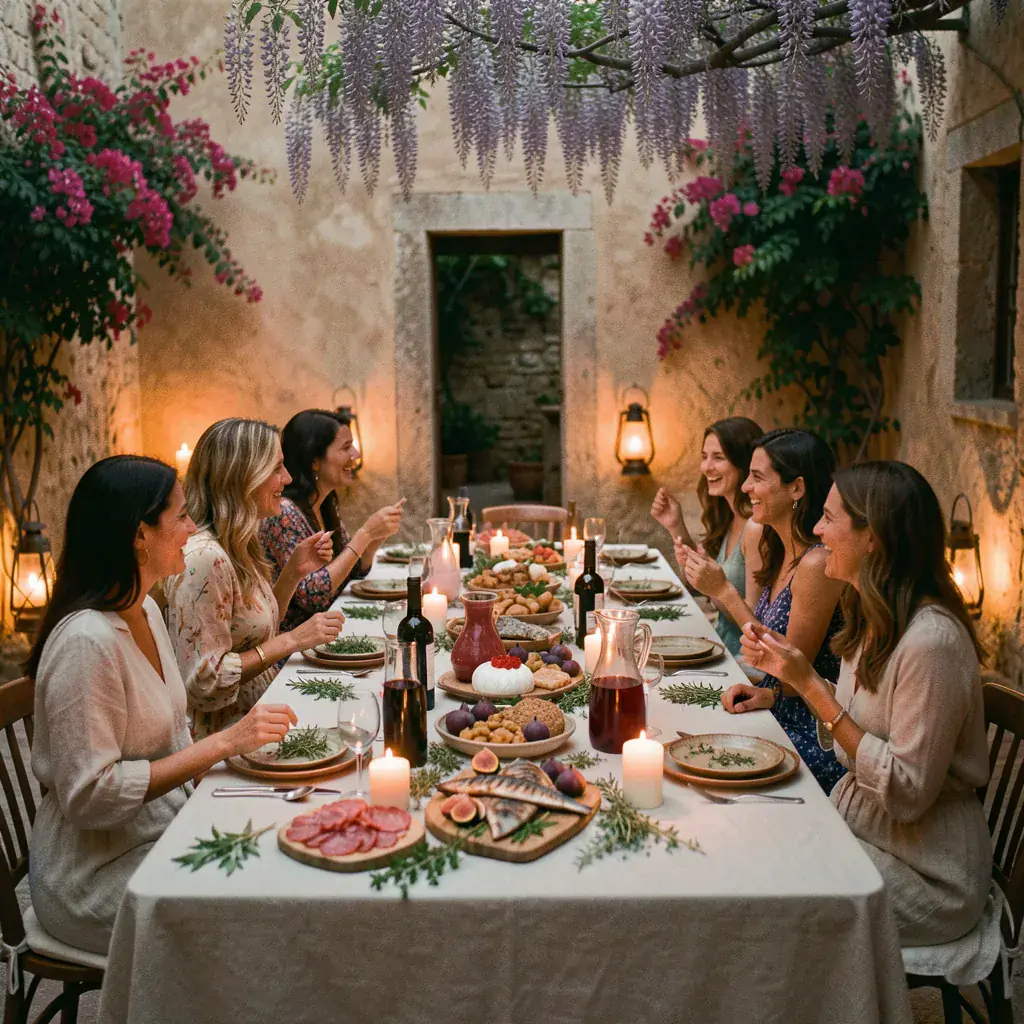
Food runs through the rest of the week too: lunch in town on the Tropea day, a vineyard evening inland on Day IV, a private culinary evening on Day V and long dinners at carefully selected restaurants, every reservation arranged and hosted. The class is where you see how the food you eat all week is made.
If you have a dietary restriction or allergy, mention it in your private inquiry; every inquiry is reviewed personally and answered within 48 hours.
Is a hosted week right for you?
Five questions, one minute
Hear when 2027 dates open
One email when 2027 dates open, and an occasional letter from Calabria. Unsubscribe any time.
Questions
Do I need cooking experience for a hands-on class?
No. Calabrian home cooking uses few ingredients and simple tools, and the techniques are learned by doing. Expect your first fileja to look lopsided; by the tenth they look like pasta.
Can I make fileja at home without the traditional rod?
Yes. A thin wooden skewer, a knitting needle or a cut metal coat hanger all work as substitutes. Use semolina, water and salt only, and rest the dough at least 30 minutes before you roll.
Does Calabrian cooking use much fish?
On the coast, yes. Calabria's long shoreline brings swordfish, sardines and anchovies, and cured fish such as sardella and salt cod belong to the tradition; pasta ca muddica pairs pasta with anchovies and breadcrumbs. Inland, pork and cheese take over. See Calabrian seafood dishes.
Is Calabrian home cooking vegetarian-friendly?
More than its reputation suggests. Potatoes with Tropea onions, stuffed peppers, eggplant fritters and pasta with tomato are all meat-free, though pork appears in many sauces and fillings. See vegetarian food in Calabria.
Sources and further reading
Checked November 19, 2026. Timetables, prices and opening hours change; confirm before you travel.
Keep reading
Related guides