Hosted week: wine
Private winery visit and tasting in Calabria
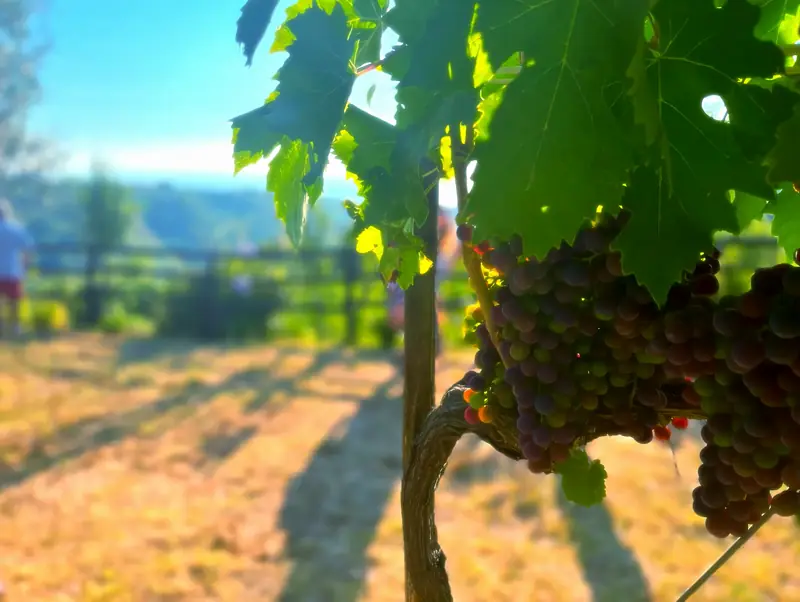
A private winery visit and tasting in Calabria means a small group hosted by appointment at a working estate, tasting wines from grapes most visitors have never tried, such as Gaglioppo, Magliocco and Greco Bianco. It is included in the hosted week in Tropea, where Day IV moves inland for a vineyard evening after a quiet morning. Because the stays run in September and October, the visit falls in or just after the Italian grape harvest, which usually runs from late August into early October.
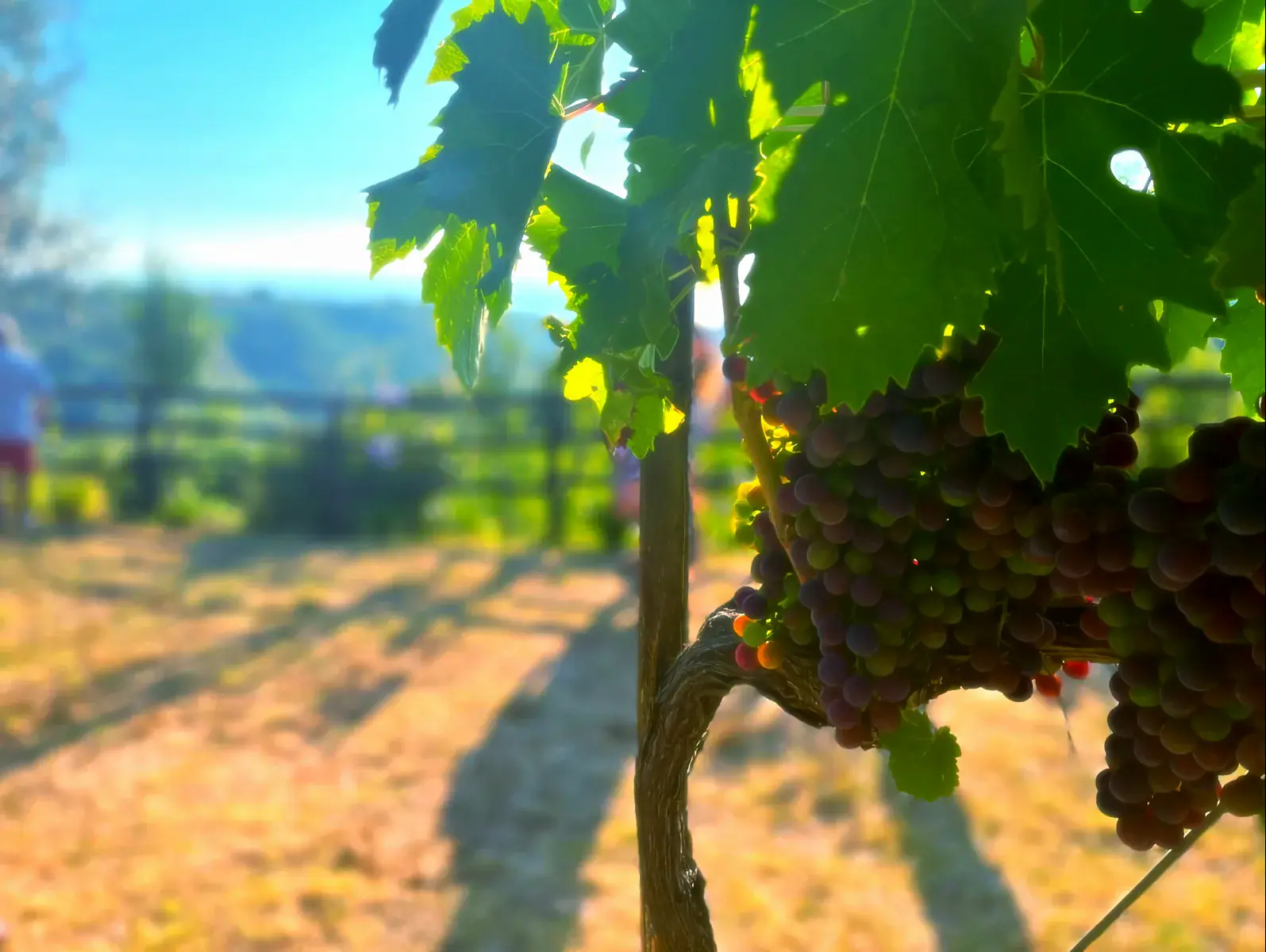
Why Calabrian wine is best met at the estate
Calabria makes far more wine than it labels with a protected name. Most of its output is red, much of it from Gaglioppo, yet only about 4 percent is classified DOC, and a large share of the rest is high in alcohol and sold to cooperatives that send it north as blending wine. The bottles worth tasting tend to come from smaller estates, and the surest way to find them is to sit at their table.
That is why you can know Barolo and Brunello by heart and still be unable to name a Calabrian grape. If your wine travel so far has been Napa tasting bars or Tuscan estates booked months ahead, three things will feel different here:
- No tasting bar. Many small Italian cantine host only by appointment, often with 24 to 48 hours' notice, and a visit usually begins in the vineyard or the cellar rather than at a counter.
- No reference points. The grapes are native and barely known abroad, so you taste without expectations, which tends to make people pay closer attention.
- A working farm. At a small estate the person pouring is often the person who farms, and in harvest season the visit fits around real work.
The native grapes you are likely to taste
A short list of native grapes does most of the work in Calabria, and these are the names worth knowing before you sit down. To go deeper, read the Calabrian wine guide and the page on Cirò wine.
| Grape | Color | What to know |
|---|---|---|
| Gaglioppo | Red | The backbone of Cirò; tannic, full-bodied wines often drunk three or four years after the vintage |
| Magliocco Canino | Red | Elegant, with good acidity and firm tannins that help it age |
| Magliocco Dolce | Red | Added to Italy's national grape register only in 2019; ripens late and suits long aging |
| Greco Nero | Red | Often at its best after a few years in bottle |
| Greco Bianco | White | Grown in almost every Calabrian wine area, especially on the Ionian coast; also the grape behind sweet Greco di Bianco |
| Mantonico | White | Structured and rich in polyphenols, a white with real weight |
| Zibibbo di Pizzo | White | An aromatic grape once nearly lost, now revived on the terraces of Pizzo |
Where Calabria's wine zones sit in relation to Tropea
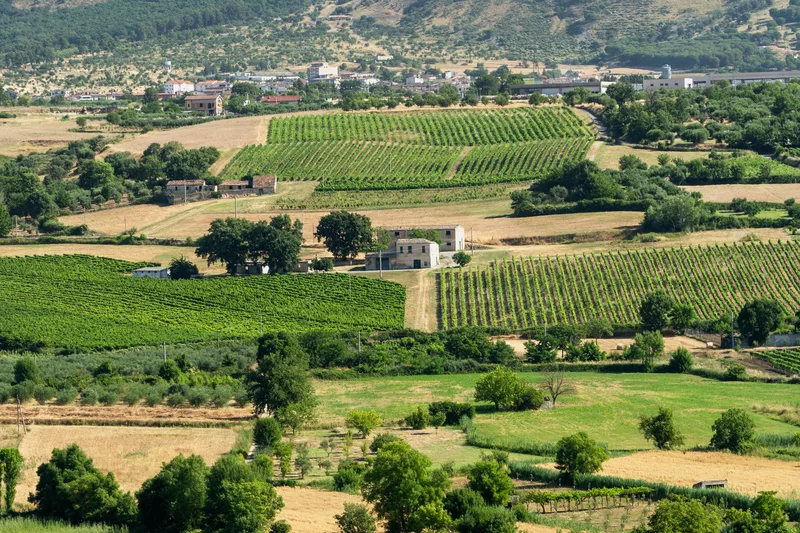
Tropea is on the Tyrrhenian side, and the region's most famous zone is not. Cirò, centered on the towns of Cirò and Cirò Marina in the province of Crotone, lies on the Ionian coast across the peninsula, and Cirò Classico is now Calabria's first DOCG. On Tropea's side of the region, the main zone is Lamezia, around Lamezia Terme, the town most visitors fly into. For named estates and how to reach them, see wineries to visit in Calabria.
| Zone | Province | Known for |
|---|---|---|
| Cirò (DOC, and Cirò Classico DOCG) | Crotone, Ionian coast | Gaglioppo reds, plus a white and a rosato |
| Melissa, Sant'Anna di Isola Capo Rizzuto | Crotone | Cirò's neighbors on the Ionian side |
| Lamezia | Catanzaro | Reds blending Gaglioppo, Magliocco, Greco Nero and Nerello; Greco-based whites |
| Savuto, Scavigna, Terre di Cosenza | Cosenza and Catanzaro | Zones across the north and center of the region |
| Greco di Bianco, Bivongi | Reggio Calabria | Sweet Greco di Bianco of at least 17% alcohol; Bivongi reds, rosés and whites |
How a private tasting usually runs at a small Italian estate
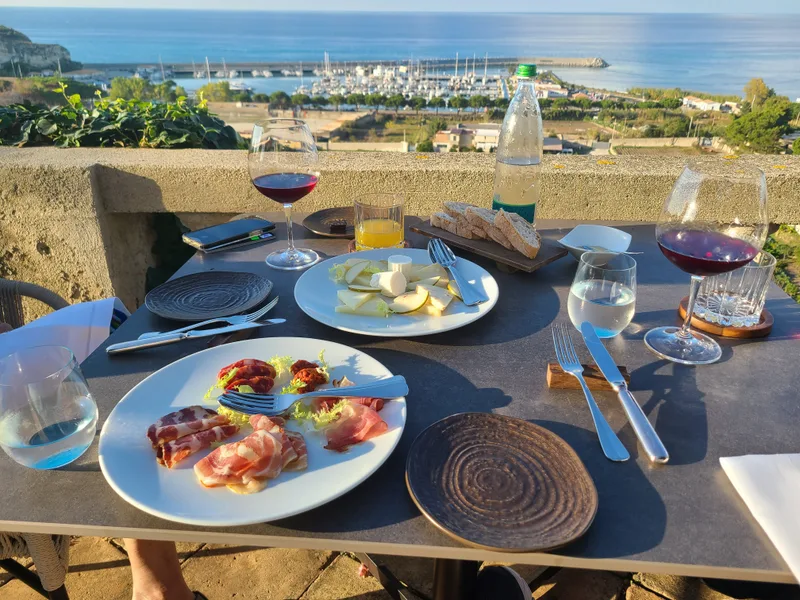
At small Italian estates, a visit typically starts outside among the vines, moves to the cellar and ends at a table. Wines come in a set order, lightest to heaviest: white, rosato, young red, aged red, then anything sweet. A few habits make it better for everyone:
- Arrive on time and go easy on perfume; aroma is half the tasting.
- Let the host offer a second pour rather than asking for one.
- Use the spittoon if there is one, or simply take small sips. Nobody minds an unfinished glass.
- Ask about the soil, the vintage and the grape. Questions about the land are welcome at a family estate.
- Avoid the middle of the day. Many cantine close for the pausa pranzo, roughly 1:00 to 3:30 pm.
- If you buy bottles to ship, ask whether the winery works with a shipper rather than sending wine through the post office yourself.
How the winery visit fits the hosted week
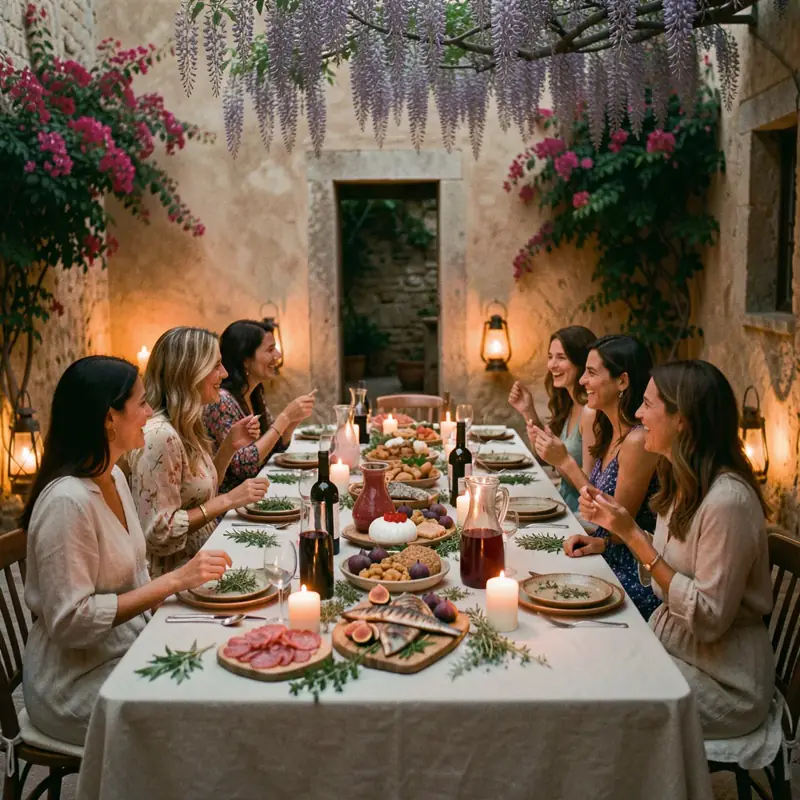
In the hosted week, Day IV is called Stillness & Wine. The morning is deliberately quiet, with time at the spa, by the pool or on the water, and in the evening the setting moves inland to a vineyard. The private winery visit and tasting is part of what the stay includes, not an add-on.
Two practical problems disappear. Nobody drives: Italy's blood alcohol limit is 0.5 g/L, and zero for drivers licensed less than three years, so on a self-drive wine day someone always stays sober or the tasting stays small. Private transport throughout the week removes that trade-off. Nobody books, either: small estates need notice, and at harvest some stop visits altogether to focus on the work. Arranging it is your host's job, not yours.
Bottles you buy for yourself are a personal expense, and shipping them home can be coordinated on request.
Is a hosted week right for you?
Five questions, one minute
Hear when 2027 dates open
One email when 2027 dates open, and an occasional letter from Calabria. Unsubscribe any time.
Questions
Do I need to know wine to enjoy a private tasting?
No. A private tasting is the easiest place to know nothing, because you can ask anything without an audience. Calabrian grapes are unfamiliar to most visitors anyway, so everyone starts from roughly the same place.
Why are Calabrian wines hard to find in the US?
Partly scale and partly history. Only about 4 percent of Calabria's wine is classified DOC, and much of the rest goes to cooperatives as blending wine for producers further north. That is one reason tasting at the source is worth the trip.
What is a Calabrian estate like during the vendemmia?
Busy. In Italy the vendemmia usually runs from late August to early October depending on area and weather, and many estates cut back on visits or pause them to focus on the work. September and October stays can overlap with it, so expect a working cellar rather than a quiet showroom. Read more about the grape harvest in Calabria.
Can I buy wine at the winery and take it home?
Usually, yes, and buying a few bottles is a good way to thank a small estate. For more than you can carry, ask about a specialist shipper. US import rules are covered in can you bring Italian food back to the US.
Sources and further reading
- Wikipedia: Calabrian wine
- DoctorWine: Eight native grape varieties from Calabria
- Italy Handbook: How to visit a winery (cantina) in Italy
Checked November 19, 2026. Timetables, prices and opening hours change; confirm before you travel.
Keep reading
Related guides