Hosted week: the sea
Sailing day on the Costa degli Dei
A sailing day on the Costa degli Dei is a full day on the water along the 55 km of Tyrrhenian coast between Pizzo and Nicotera, and it is one of the experiences included in the hosted week in Tropea. From a boat you see what the coast road hides: Tropea's old town on its rock, sea caves, and the granite coves under Capo Vaticano that are easiest to reach by water. In September the sea usually sits around 24 to 26°C (75 to 79°F), warm enough for a long swim.
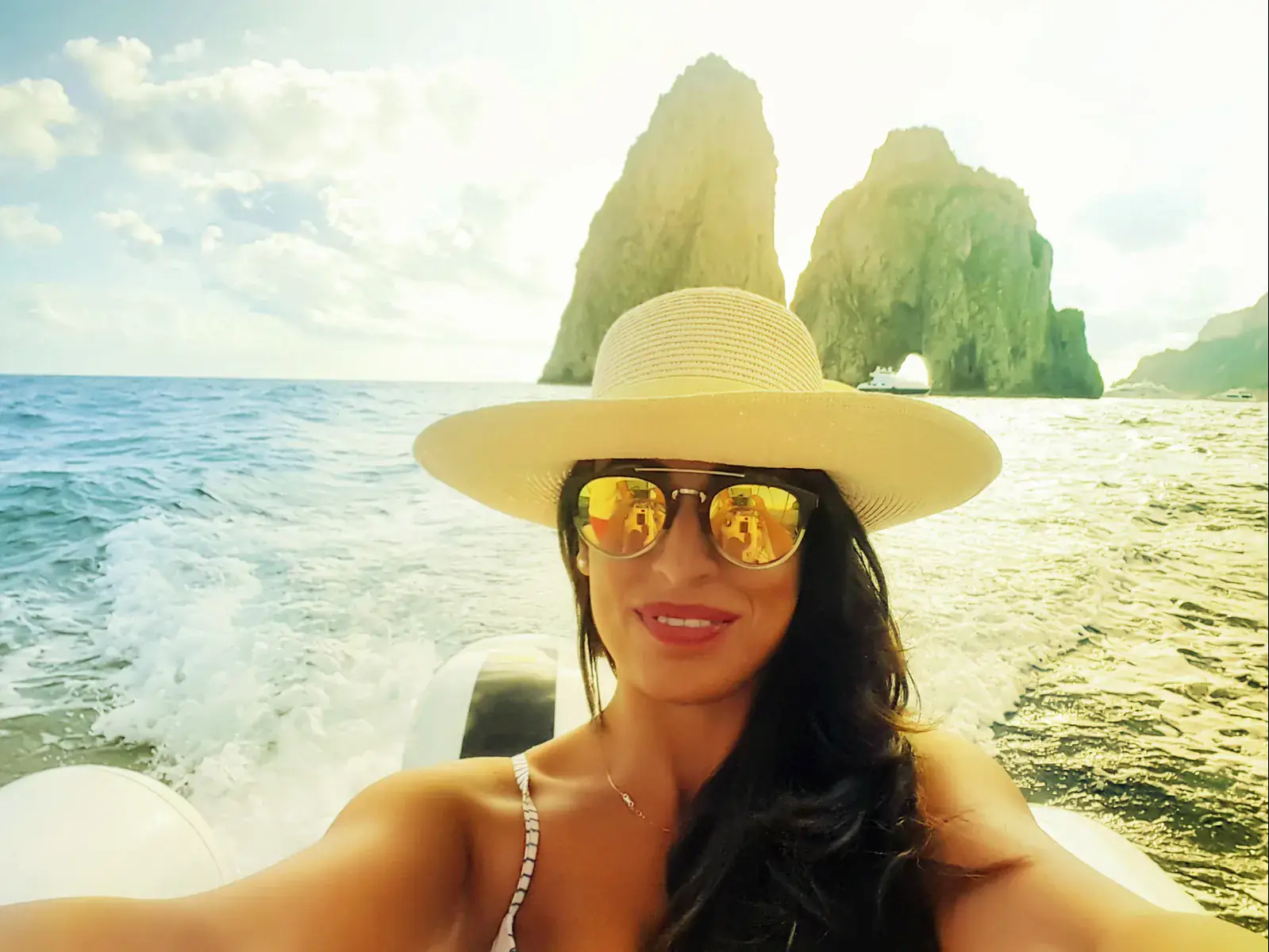
What the Costa degli Dei looks like from the water
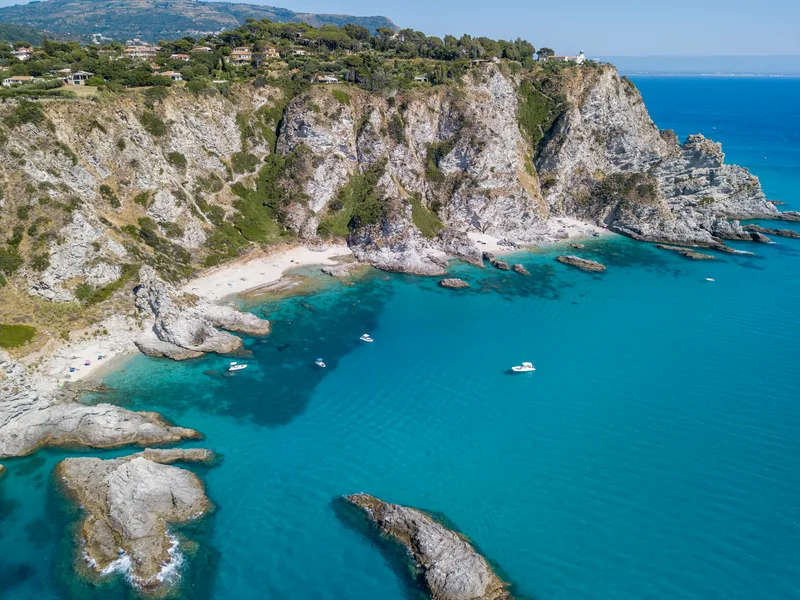
From the sea, the Costa degli Dei reads as long stretches of fine sand broken by cliffs that plunge straight into the water, with grottoes opening at their base. The name covers the whole coastline of the province of Vibo Valentia, about 55 km from Pizzo in the north to Nicotera in the south, with Briatico, Zambrone, Parghelia, Tropea, Ricadi and Joppolo in between.
On land you meet one beach at a time. On the water the landmarks line up in order.
| Stretch | What stands out |
|---|---|
| Pizzo | Castello Murat, a favored place to watch Stromboli's profile, and the Piedigrotta church, carved entirely into tufa by local sailors |
| Briatico | The Rocchetta, a ruined Saracen tower by the harbor and one of the most photographed points on this coast |
| Zambrone | Clear water over a seabed known to divers; on land, the cove is reached by a rock-cut stairway dropping about 100 m |
| Tropea | The old town along the edge of its rock, Santa Maria dell'Isola on its own outcrop, and sea caves such as the Grotta del Palombaro and Grotta Azzurra |
| Capo Vaticano (Ricadi) | White-grey granite, a lighthouse from 1885, and coves including Grotticelle, Praia i Focu, Ficara and Formicoli |
| Nicotera | Nicotera Marina, a long free beach at the southern end of the coast |
Capo Vaticano is the stretch most worth seeing by boat
Capo Vaticano, the headland south of Tropea in the comune of Ricadi, is where being on the water pays off most. The cape is made of a white-grey granite studied by geologists for its characteristics, it rises to about 124 m, and its lighthouse dates from 1885.
Below the cape, Praia i Focu is a set of three small sandy bays separated by granite ridges and closed in by steep cliffs. The path down from the Belvedere is steep and locals advise against it, and older trails from above have collapsed, so the practical way in is by sea. The rock walls keep the bays sheltered and the water clear. There are no services at all, which is much of the appeal.
The same headland is good ground for the Tropea red onion, and on clear days it looks straight out at the Aeolian Islands. For the beaches you can reach on foot, see the Capo Vaticano travel guide.
How warm the sea is in September and October
The sea off Tropea stays warm well after the summer crowds leave. September averages around 24 to 26°C, a touch cooler than August, and October drops to roughly 21 to 23°C, brisk for the first minute and then pleasant. Averages vary by source and year, so check Tropea weather and sea temperature by month before you pack.
| Month | Sea temperature | What it feels like |
|---|---|---|
| September | About 24 to 26°C (75 to 79°F) | Warm; long swims are easy |
| October | About 21 to 23°C (70 to 73°F) | Fresh on entry, then pleasant |
Why a small group changes a day at sea
If you have taken a boat tour on the Amalfi Coast or out of a busy Greek harbor, you know the usual version: forty passengers, a fixed loop, commentary over a loudspeaker and a short stop at a crowded cove. The hosted week is for 6 to 8 women, and the day sailing the Costa degli Dei is part of that week, so there is no ticket to buy, no departure board to read and no one to coordinate.
A few things are still worth thinking about before a day on the water:
- Seasickness. If you are prone to it, take your usual remedy before you set out, sit low and central, and keep your eyes on the horizon.
- Sun. Shade on deck is limited on many boats. Bring a hat with a strap, polarized sunglasses and a long-sleeved cover-up.
- Swimming. In the coves under Capo Vaticano the bottom drops away a few meters from shore, so swim within your comfort and use a float if you like one.
- Spray. A small dry bag keeps your phone and a spare layer dry, and the air on the water can feel cooler late in the day than it does on land.
Booking a boat day yourself versus the hosted sea day
Arranging a boat day on your own is straightforward in season: trips around Capo Vaticano are often sold through hotels, the marina and local dive centers. The difference is in everything around the boat.
| Booking it yourself | In the hosted week | |
|---|---|---|
| Finding the boat | Compare operators at the port, marinas or dive centers | Arranged before you arrive |
| Getting to the water | Taxi, car and parking, or the walk down from town | Private transport throughout |
| Cost | Paid separately; varies by boat and season | Included in the stay, from $5,000 per woman |
| When plans change | You rebook | Your host runs the week in real time |
Where the sea day sits in the hosted week
The week has a loose shape, and Day III is The Sea: a day on the water along the Costa degli Dei. It follows a day given to Tropea itself (the town, lunch in town, dinner) and comes before Day IV, which opens with a quiet morning at the spa, by the pool or on the water and closes with a vineyard evening inland.
Private transport throughout means the logistics of reaching the water are handled like everything else. Manuela, the founder, is there throughout and deals with details as they come up. You bring a swimsuit and a hat.
A crossing to Stromboli is a different outing and is not among the included experiences, though private requests outside the stay can be coordinated on request. The guide to the boat trip from Tropea to Stromboli explains how that day works.
Is a hosted week right for you?
Five questions, one minute
Hear when 2027 dates open
One email when 2027 dates open, and an occasional letter from Calabria. Unsubscribe any time.
Questions
Will Stromboli be visible during a day on the water?
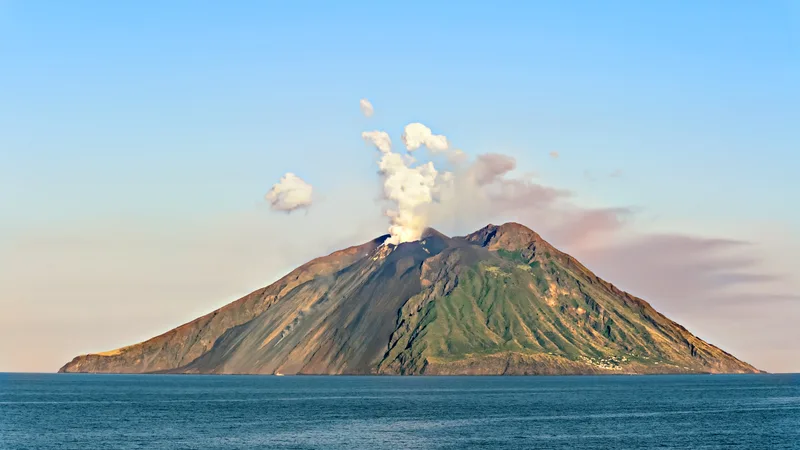
Often, yes. On clear days the volcano is a constant presence on the horizon along the Costa degli Dei, roughly 60 km out to sea from Tropea. Haze can hide it completely, so treat a sighting as a bonus rather than a promise.
Do I have to swim on a sailing day?
No. A day on the water is just as good spent reading, talking and watching the cliffs go by. If you do swim, remember that the coves under Capo Vaticano get deep within a few meters of shore.
Where is the water calmest for a swim along this coast?
In the sheltered coves. At Praia i Focu under Capo Vaticano, granite walls close in three small bays and keep the water calm and clear, while open stretches of beach take whatever the wind brings.
Are the sea caves near Tropea worth seeing?
Yes, for the color of the water inside them. Tropea's stretch of coast has several caves reached from the sea, including the Grotta del Palombaro, Grotta San Lorenzo and Grotta Azzurra, and the Capo Vaticano coast is known for exploring caves by swimming or by boat. Whether a boat can go in depends on its size and the sea that day.
Sources and further reading
- Italia.it: Costa degli Dei, 20 cose da vedere e fare
- Spiagge.it: Praia i Focu, Capo Vaticano
- Seatemperature.net: Tropea water temperature in September
Checked November 19, 2026. Timetables, prices and opening hours change; confirm before you travel.
Keep reading
Related guides