Calabria road trip
Calabria road trip itinerary
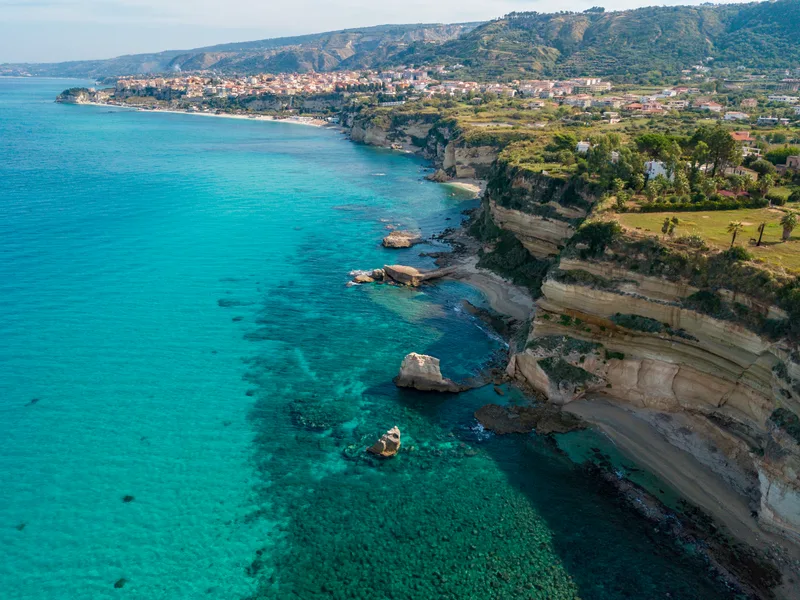
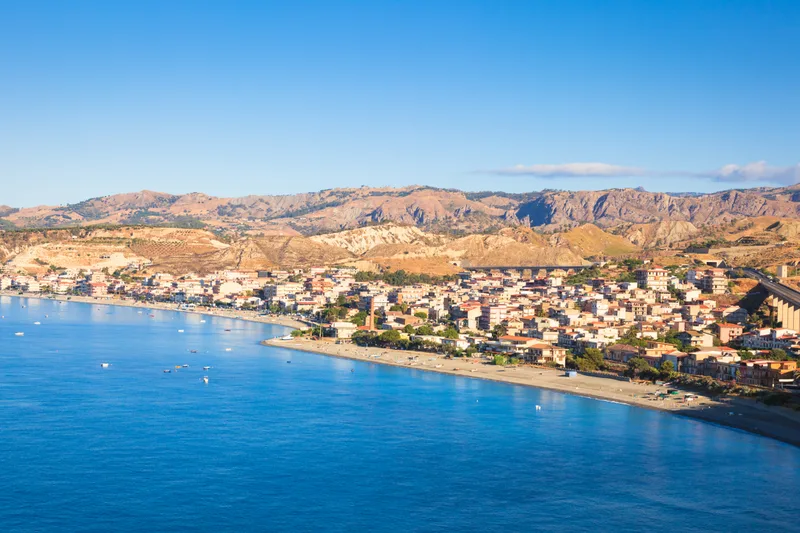
A Calabria road trip that covers both coasts needs about ten days and 880 km (550 miles). Start at Lamezia Terme and drive north up the Tyrrhenian to Diamante, cross the Pollino foothills to the Ionian, then follow that coast south through Cirò, Le Castella, Stilo and Gerace, round the toe to Reggio Calabria and come home up the Tyrrhenian via Scilla and Tropea. No single day has more than about three hours at the wheel.
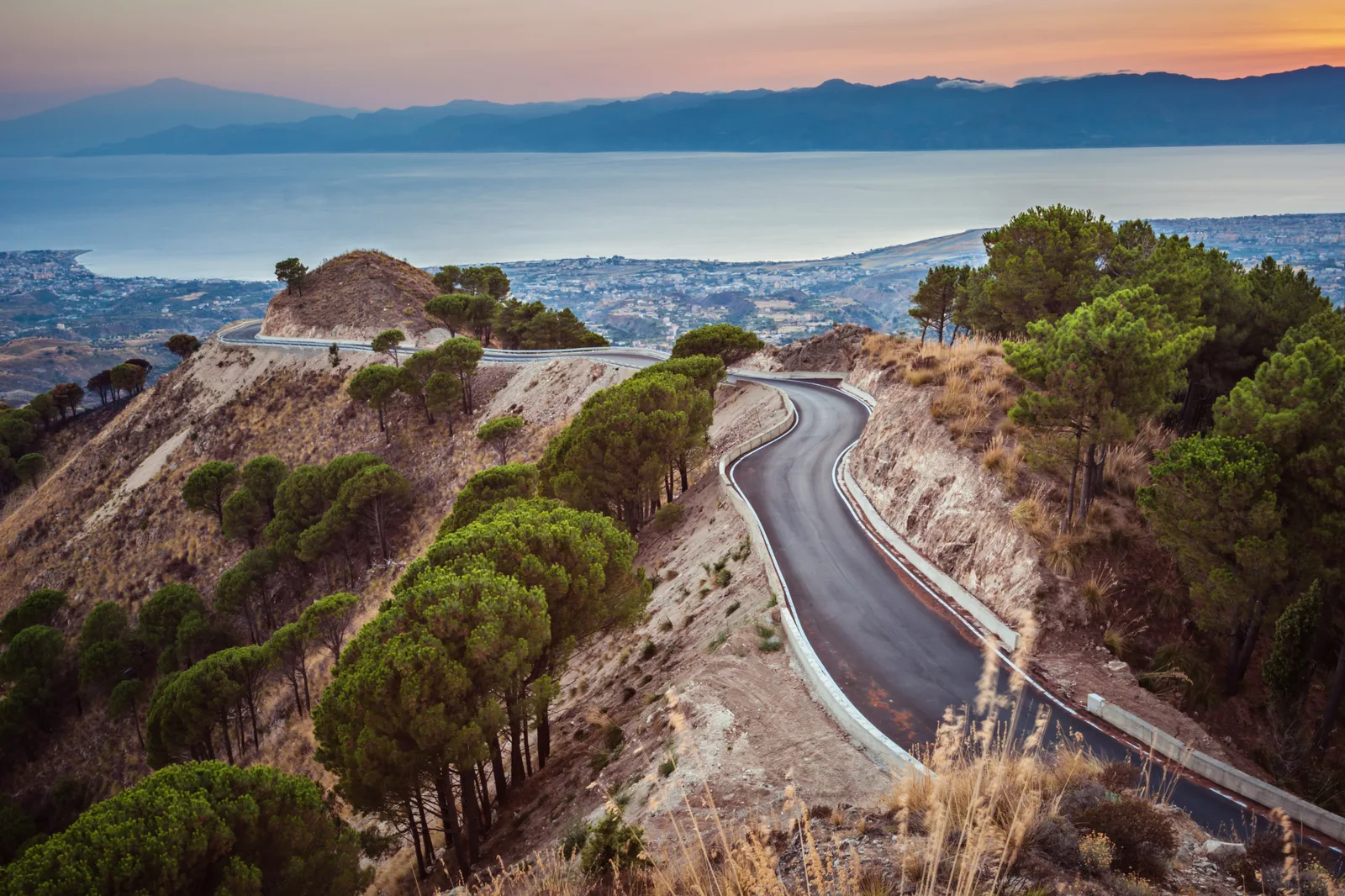
The loop at a glance: nine nights, two seas
The route runs clockwise from Lamezia Terme airport and returns there, so one rental car does the whole trip. It deliberately mixes the two coasts: the Tyrrhenian side gives you the cliff towns and beaches, and the Ionian side holds most of the Greek and Byzantine stops on this route. If you only have a week, the 7-day Calabria itinerary keeps to the Tyrrhenian and the Sila instead, and Tyrrhenian vs Ionian coast of Calabria explains the difference in detail.
| Day | Drive | Distance and time | Sleep |
|---|---|---|---|
| 1 | Lamezia airport, Paola, Diamante | 104 km (65 mi), about 2 hr 10 min | Diamante |
| 2 | Praia a Mare, then inland to Civita | 114 km (71 mi), about 2 hr | Civita |
| 3 | Civita to Rossano | 55 km (34 mi), about 1 hr 10 min | Rossano |
| 4 | Cirò wine country, Le Castella | 122 km (76 mi), about 2 hr 15 min | Le Castella |
| 5 | Ionian coast to Stilo, then Gerace | 167 km (104 mi), about 3 hr | Gerace |
| 6 | Gerace and Locri | 18 km (11 mi) | Gerace |
| 7 | Bova, Pentedattilo, Reggio Calabria | 141 km (88 mi), about 3 hr | Reggio Calabria |
| 8 | Riace Bronzes, then Scilla | 22 km (14 mi), 25 min | Scilla |
| 9 | Scilla to Tropea | 82 km (51 mi), about 1 hr 20 min | Tropea |
| 10 | Pizzo, Lamezia airport | 56 km (35 mi), about 1 hr 15 min | Home |
Days 1 and 2: the northern Tyrrhenian, from Paola to Praia a Mare
Day 1. Drive about 1 hour 15 minutes north to Paola, home of the sanctuary of San Francesco di Paola, patron saint of Calabria and of seafarers. Local tradition says a boatman refused to ferry him to Messina, so he crossed the Strait on his own cloak. Continue 55 minutes to Diamante, where 85 artists were invited in 1981 to paint the walls of the fishing quarter; new murals were added for the project's 40th anniversary in 2021. This stretch is the Riviera dei Cedri, named for the citron that still grows here. See the Diamante murals guide.
Day 2. Forty minutes north, Praia a Mare has a 2 km beach and, about 100 meters offshore, Dino Island with large sea caves you can reach by small boat. A Byzantine-era watchtower stands on the rocks at the south end of the beach. After lunch, turn inland for about 1 hour 20 minutes to Civita, an Arbëreshë hill town founded in the 15th century by Albanian refugees from the Ottoman advance, inside the Pollino National Park.
Days 3 and 4: Rossano's codex, Cirò's vineyards and a sea castle
Day 3. Drop down to the Ionian at Rossano, now part of the merged town of Corigliano-Rossano, about 1 hour 10 minutes away. The Diocesan Museum beside the cathedral holds the Codex Purpureus Rossanensis, a 6th-century Greek gospel book on reddish-purple parchment and one of the oldest surviving illuminated manuscripts of the New Testament. The Byzantine church of San Marco is in the same old town. Spend the night; the next day is longer.
Day 4. An hour south is Cirò, the Ionian wine district where Gaglioppo makes at least 95% of the red. Some estates open their cellars: Librandi in Cirò Marina, for example, runs tours with tastings on weekdays by booking. Read our Cirò wine guide first. Then drive about 1 hour 10 minutes to Le Castella, a fortress standing in the sea off the village of the same name, inside the Capo Rizzuto marine protected area, the largest in Italy. Sleep within sight of it.
Days 5 and 6: Stilo's Cattolica and the rock of Gerace
Day 5. This is the longest coastal day. The SS106 runs the whole Ionian shore, and the 109 km from Le Castella to Stilo take close to two hours. Stilo's Cattolica is a small 9th-century Byzantine church in brick, built on an inscribed-cross plan when Calabria was part of the Byzantine Empire, and it is counted among the most important examples of Byzantine architecture. Continue about an hour south to Gerace for two nights.
Day 6. Gerace stands on a rock about 500 meters high, 10 km inland from Locri, and its name comes from the Greek for sparrowhawk. Its Norman cathedral is the largest religious building in Calabria. In the afternoon drive 15 minutes down to the site of ancient Locri Epizefiri, a Greek colony whose finest finds, including a marble group of the Dioscuri on horseback, are now in Reggio's museum. Our Gerace travel guide has more.
Day 7: around the toe of Italy to Reggio Calabria
Follow the coast south and west around the toe. Bova, about 1 hour 30 minutes from Gerace, is one of the villages where Calabrian Greek is still spoken and is on the Borghi più belli d'Italia list. Forty minutes on, Pentedattilo clings to a rock that once looked like five fingers, which is what its Greek name means. It was founded as a colony of Chalcis in 640 BC, badly damaged by the 1783 earthquake, which sent much of its population down to Melito di Porto Salvo, left entirely uninhabited from the mid-1960s and partly restored by volunteers from across Europe since the 1980s. Reggio Calabria is 40 minutes beyond. The Magna Graecia sites in Calabria page puts these places in context.
Days 8 to 10: the Riace Bronzes, Scilla, Tropea and home
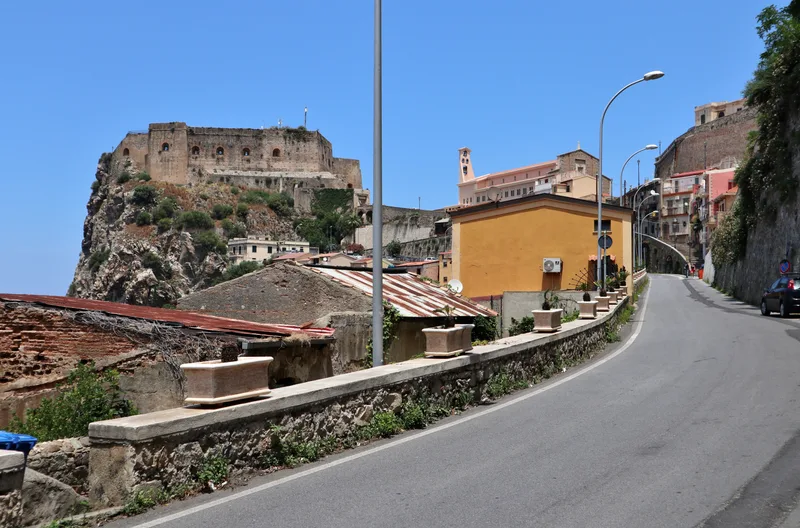
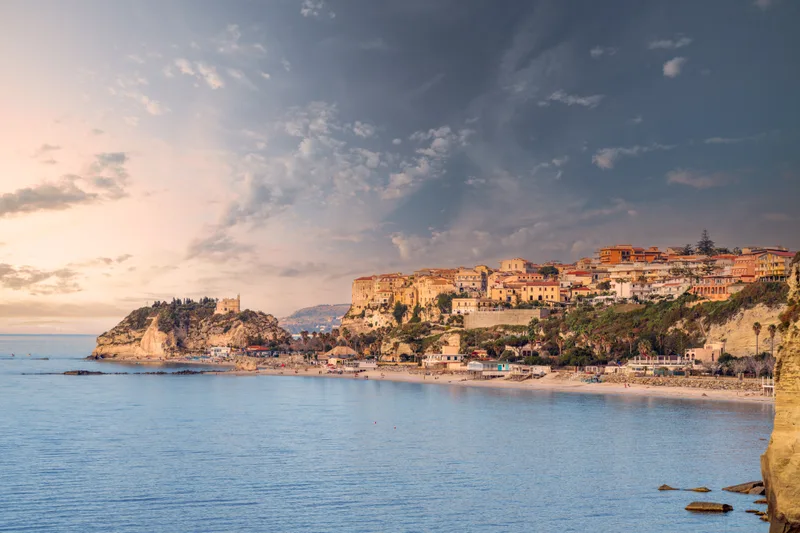
Day 8. See the Riace Bronzes at the National Archaeological Museum in the morning, then drive 25 minutes to Scilla and its fishermen's quarter of Chianalea for the night. Day 9. About 1 hour 20 minutes north on the A2 brings you to Tropea for a last full evening on the Tyrrhenian; three days in Tropea shows what to add if you can stay longer. Day 10. Stop in Pizzo for the cave church of Piedigrotta and a tartufo, then Lamezia airport is 35 minutes away.
Road notes for both coasts
- Two very different main roads. The A2 on the Tyrrhenian side is toll-free and fast. The SS106 runs 491 km along the Ionian from Reggio Calabria to Taranto and passes through town after town, so budget roughly an hour for every 55 to 60 km.
- Fill up before the inland stretches. Days 2 and 7 cross hill country, so refuel in the larger towns first.
- Go in September or early October. The sea is still warm on both coasts and the roads are calmer than in August.
- Know the rules before you drive. Our page on driving in Calabria covers the International Driving Permit, speed cameras and restricted traffic zones.
Planning Calabria?
Hear when 2027 dates open
A small group of women, one week in Tropea, everything arranged. Join the list for first word on dates and an occasional letter from Calabria.
One email when 2027 dates open, and an occasional letter from Calabria. Unsubscribe any time.
Questions
Which direction should I drive the loop?
Clockwise, as here, puts the long Ionian days in the middle of the trip and ends on the Tyrrhenian near Lamezia Terme airport. Driving it the other way works too, but you would finish with the long SS106 days just before your flight.
Can I shorten the road trip to a week?
Drop Praia a Mare and Civita and start the Ionian at Cirò, driving across from Lamezia Terme airport in about two and a half hours (142 km, 88 miles). You lose the northern Tyrrhenian and the Arbëreshë village but keep both coasts.
Is the Ionian coast of Calabria worth the drive?
For travelers interested in the Greek and Byzantine past, yes: Rossano, Stilo, Gerace and Locri are the reason to come. The old towns on this side are small, so book rooms ahead even outside August.
Where should I stay on the Ionian side?
Small hotels and guesthouses in Rossano, Le Castella and Gerace match this route. Choose places inside or right beside the old towns so you can walk in the evening.
Sources and further reading
- Strada statale 106 Jonica (Wikipedia)
- Pentedattilo (Wikipedia)
- Cattolica di Stilo (Wikipedia)
- Librandi: visite in cantina
- Diamante (Wikipedia, Italian)
Checked November 19, 2026. Timetables, prices and opening hours change; confirm before you travel.
Keep reading
Related guides