Archaeology guide
Magna Graecia sites in Calabria
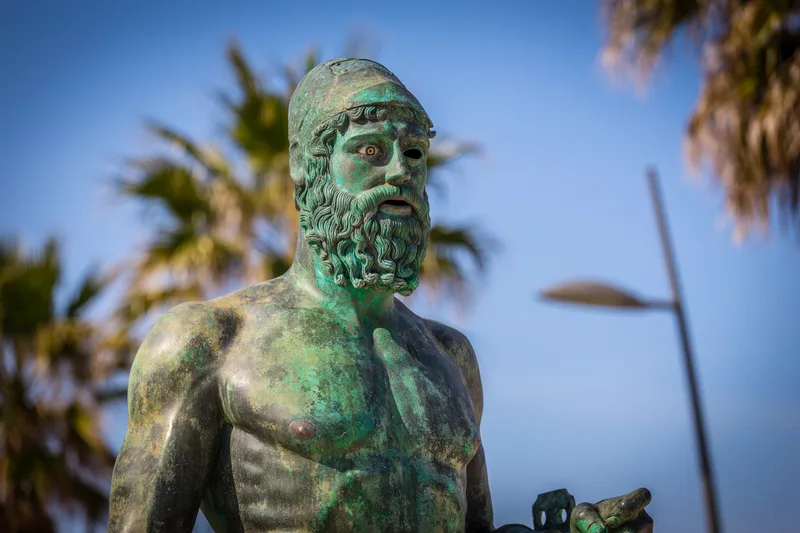
Calabria's main Magna Graecia sites are Locri Epizefiri on the Ionian coast, Capo Colonna near Crotone with the last standing column of Hera's temple, the buried city of Sibari, Scolacium near Catanzaro, and the walls of Hipponion in Vibo Valentia, the closest to Tropea at about 35 to 45 minutes. The finest objects from these cities, including the Riace Bronzes and Locri's votive plaques, are in the national museum in Reggio Calabria. The ruins are spread across two coasts, so plan one area per day.
Magna Graecia was Calabria's Greek age
Magna Graecia, Greater Greece, is the name for the Greek-speaking cities founded along the coasts of southern Italy from the 8th century BC. Euboean Greeks came first, founding Rhegion (Reggio), and Achaeans followed shortly before 720 BC with Sybaris and Kroton. Calabria's shores eventually held many more colonies, among them Locri Epizephyrii, Kaulonia, Hipponion, Medma, Metauros, Terina, Laos and Scylletium.
The cities were rich and quarrelsome. Kroton destroyed Sybaris in about 510 BC. Rome sent garrisons into the region in the 280s BC when the Greek cities asked for help against the Bruttii and Lucanians, and their independence ended during the Second Punic War, with annexation by Rome in 205 BC.
What survives above ground is patchy, because later builders reused the stone and rivers buried whole districts. That is why a museum visit matters as much as the ruins. For the longer story, see history of Calabria.
The main Greek sites at a glance
The sites sit on both coasts, from Vibo Valentia near Tropea to Sibari in the far north-east, so group them by area. Reggio's museum is the one stop that gathers the best finds from all of them.
| Site | Ancient city | What you see | From Tropea by car |
|---|---|---|---|
| Vibo Valentia | Hipponion, founded by Locri in the late 7th century BC | A stretch of Greek wall with tower foundations; a state museum in the castle | 35 to 45 min |
| Roccelletta di Borgia | Skylletion, later Roman Scolacium | Roman theater and amphitheater, forum, a Norman basilica, olive grove, site museum | 1 h 40 min to 2 h |
| Portigliola, near Locri | Locri Epizephyrii, founded about 680 BC | Theater, city walls, temple and sanctuary areas; national museum | 1 h 45 min to 2 h |
| Reggio Calabria | Rhegion | The national museum: Riace Bronzes, Locri plaques, the Dioscuri | 1 h 30 min to 1 h 45 min |
| Capo Colonna, near Crotone | Kroton's sanctuary of Hera Lacinia | One Doric column; archaeological park and museum | 2 h 30 min to 2 h 45 min |
| Sibari, Cassano all'Ionio | Sybaris, then Thurii and Roman Copia | Excavated streets and quarters; the Sibaritide national museum | 2 h 30 min to 3 h |
Locri Epizefiri: early written laws and Persephone's sanctuary
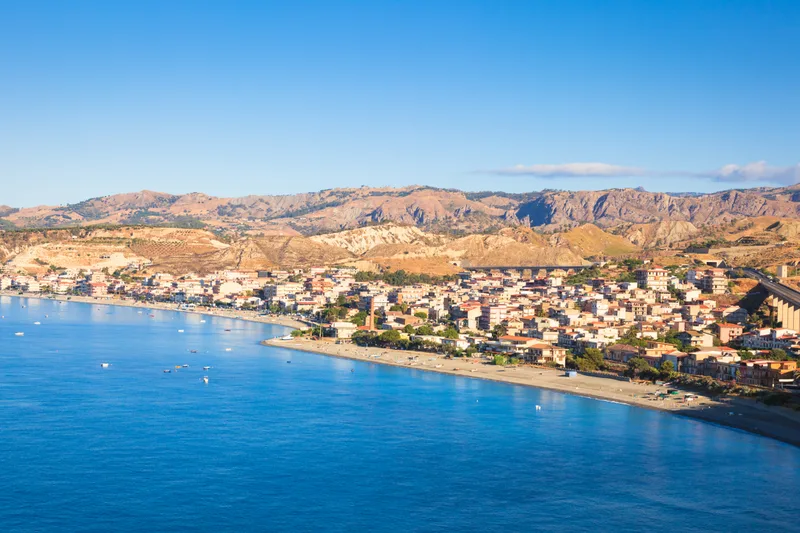
If you can see only one Greek city in Calabria, make it Locri Epizefiri, spread over fields and olive groves about 3 km south of modern Locri, in the comune of Portigliola. It was founded about 680 BC by Greeks from Locris, and its lawgiver Zaleucus is credited with the first written Greek law code.
Look for the city walls, a circuit of about 7 km still visible in many stretches; the theater in the Pirettina district, built in the 4th century BC for about 4,500 spectators; the site of the Ionic temple at Marasà; and the hill of Mannella, home of a famous sanctuary of Persephone. The Mannella sanctuary produced the pinakes, painted clay plaques showing the myth of Persephone, and many of them are now in Reggio.
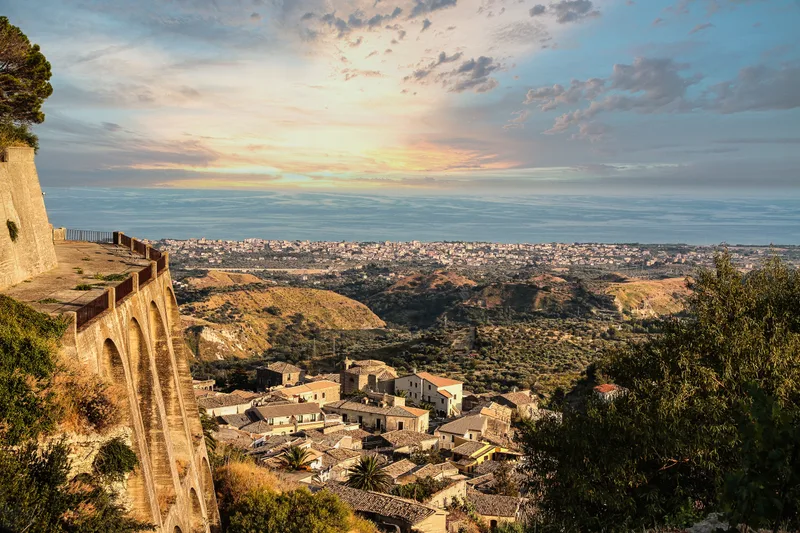
Gerace, the Norman hill town, stands about 10 km inland, and the two make a natural day together. See the Gerace travel guide.
Capo Colonna and Crotone: one column of Hera's great sanctuary
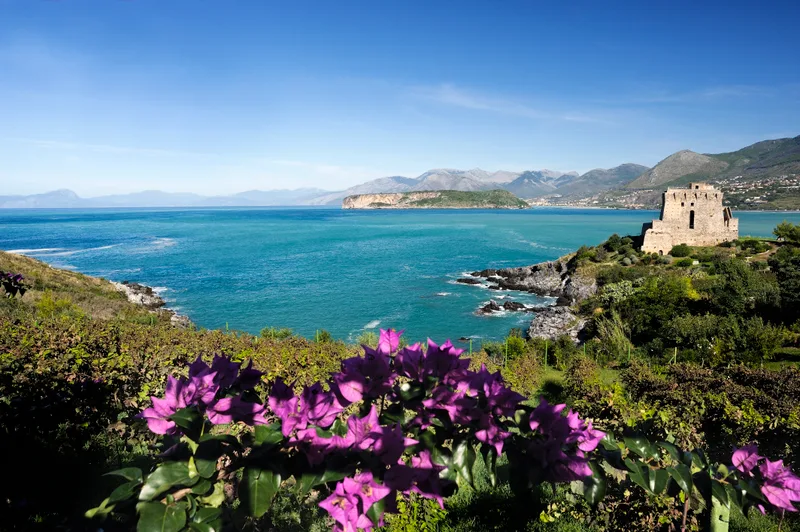
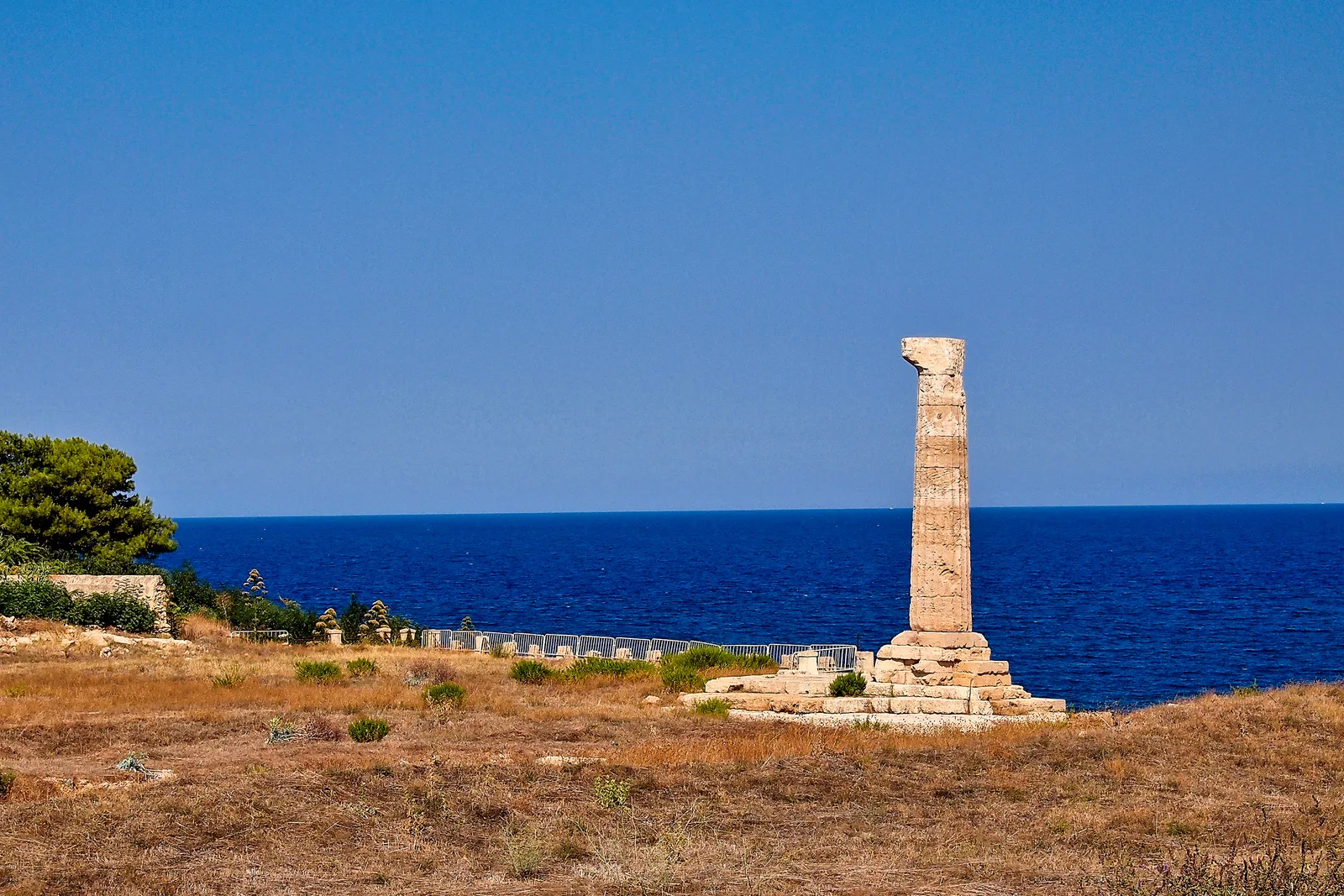
On the headland of Capo Colonna, about 8 to 10 km south of Crotone, a single Doric column a little over 8 meters tall is all that stands of the temple of Hera Lacinia. The sanctuary, active from the 7th century BC, was the most famous in Magna Graecia and served as the meeting place and treasury of the league of Greek cities. A second column stood beside the survivor until an earthquake in 1638, and much of the temple's stone was carried off to build the bishop's palace in Crotone. Today the whole peninsula is an archaeological park with a museum.
Kroton itself, founded around 710 BC by Achaean settlers, is where Pythagoras set up his school around 530 BC, and it produced the wrestler Milo, its most famous Olympic champion. Offerings from the sanctuary known as the Treasure of Hera, including a gold diadem, were given their own room in Crotone's national archaeological museum, founded in 1968. The Capo Colonna museum reopened with a renewed layout in March 2026, so check which of the two shows them when you visit.
Sibari: the city that gave English the word sybarite
Sybaris, founded around 720 BC, was so wealthy that its name became a byword for luxury and pleasure-seeking. Kroton destroyed it in about 510 BC. Ancient writers said the victors diverted the river Crati over the ruins, but core samples point to natural flooding instead. Athenian-led settlers founded Thurii on part of the site in 444 or 443 BC, and the Romans later laid out Copia on the same street grid.
The archaeological park lies at Sibari, in the comune of Cassano all'Ionio, with excavated areas known as Parco del Cavallo, with its two main streets and a theater, Casa Bianca, Stombi and Prolungamento Strada. On 18 January 2013 a flood covered the whole park with water and silt, and pumps still have to keep groundwater out. The finds are in the Museo archeologico nazionale della Sibaritide. It is the farthest site from Tropea, so save it for a trip that includes the northern Ionian coast.
Scolacium and Hipponion are the closest to Tropea
Hipponion, today's Vibo Valentia, is about 30 km from Tropea and the easiest Greek site to fit into a morning. It was probably founded in the late 7th century BC by settlers from Locri and became the Roman colony of Vibo Valentia in 194 BC. Its wall once ran for about 7 km; around 350 meters survive with the foundations of eight towers, and the castle above town holds a state museum.
Scolacium, at Roccelletta di Borgia on the Gulf of Squillace, began as the Greek Skylletion and became a Roman colony in 124 BC. It was the birthplace of Cassiodorus, the statesman who founded the Vivarium monastery. Its ruins lie in one of the largest olive groves in southern Italy: a theater for about 5,000 people, an amphitheater from the time of Emperor Nerva that is the only one found so far in Calabria, the forum and the shell of a Norman basilica. The park also has a museum, and in 2006 it received a sculpture by Antony Gormley.
Since 2025 a CalabriaCulturaPass has combined entry to the Reggio museum with smaller state sites, including the Medma museum and park at Rosarno and the Metauros museum at Gioia Tauro, valid for six months. Check which sites it covers when you buy, and see the guide to the Riace Bronzes at the Reggio Calabria museum for the museum itself.
Planning Calabria?
Hear when 2027 dates open
A small group of women, one week in Tropea, everything arranged. Join the list for first word on dates and an occasional letter from Calabria.
One email when 2027 dates open, and an occasional letter from Calabria. Unsubscribe any time.
Questions
Which Greek site in Calabria is closest to Tropea?
Hipponion, in Vibo Valentia, about 30 km away and 35 to 45 minutes by car. You can see the surviving stretch of Greek wall and the state museum in the castle in a morning.
Are there standing Greek temples in Calabria?
Very little stands. Capo Colonna has a single column of the temple of Hera Lacinia, and Locri shows foundations and fragments. For whole Greek temples you would need to go to Paestum in Campania or to Sicily.
Can you see several Magna Graecia sites on one ticket?
Partly. The CalabriaCulturaPass, launched in 2025, combines the Reggio museum with some smaller state sites at a discount and is valid for six months from first use. It is sold through the Musei Italiani app, museiitaliani.it, coopculture.it and at the Reggio museum.
How many days do you need for Greek Calabria?
Two to three days covers the essentials: one for the Reggio museum, one for Locri and Gerace, and one for Capo Colonna and Crotone. Add a fourth if you want Sibari in the far north-east.
Sources and further reading
- Wikipedia: Magna Graecia
- Wikipedia (Italian): Locri Epizefiri
- Wikipedia: Sybaris
- Wikipedia (Italian): Capo Colonna
- Wikipedia (Italian): Parco archeologico di Scolacium
Checked November 19, 2026. Timetables, prices and opening hours change; confirm before you travel.
Keep reading
Related guides