Coast comparison
Tyrrhenian vs Ionian coast of Calabria
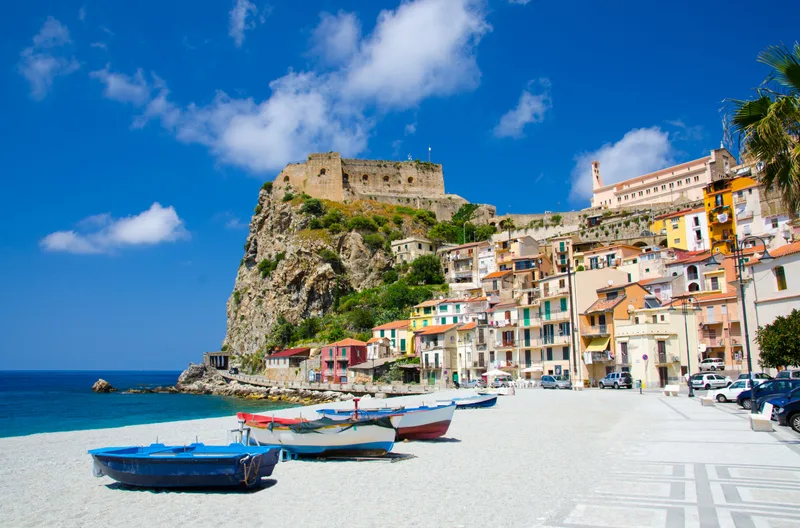
Choose the Tyrrhenian coast for a first trip: it has Tropea, Scilla and Capo Vaticano, cliff-backed coves, sunsets over the water, the main railway and the A2 motorway. Choose the Ionian coast for Greek sites such as Capo Colonna and Locri, the sea fortress of Le Castella, sunrise light and fewer foreign visitors, accepting slower roads and trains. The Ionian side also held 19 of Calabria's 27 Blue Flag towns in 2026.
The two coasts side by side
Calabria's two seas are only about 30 km apart at the narrowest point, yet the coasts differ in shape, history and how easy they are to travel. This table sums up the differences that matter when choosing where to stay.
| Tyrrhenian coast (west) | Ionian coast (east) | |
|---|---|---|
| Light | The sun sets over the sea | The sun rises over the sea |
| Shoreline | Cliffs, capes and coves; the Costa Viola is about 35 km of high cliffs | Wide gulfs and low capes: the Gulf of Squillace, Capo Rizzuto, Capo Colonna |
| Named stretches | Riviera dei Cedri, Costa degli Dei, Costa Viola | Alto Ionio, the Crotone coast, Gulf of Squillace, the Locride |
| Towns visitors know | Tropea, Pizzo, Scilla, Praia a Mare, Diamante | Soverato, Le Castella, Crotone, Roccella Jonica, Locri |
| Ancient sites | Fewer headline sites; Reggio's museum at the southern tip | Sybaris, Kroton and Capo Colonna, Locri; the Riace Bronzes were found here |
| Blue Flag towns, 2026 | 8 | 19 |
| Main road | A2 motorway, 432 km, inland of the coast | SS106: 415 km in Calabria, 82 km of it dual carriageway |
| Railway | Main line with Frecciarossa and Italo trains from Rome | Single-track Ionian railway, electrification still in progress |
| Airport | Lamezia Terme (busiest) or Reggio Calabria | Crotone, or Lamezia Terme across the isthmus |
| Climate tendency | More rain on the western slopes | Drier and warmer |
| Best for | First trips, boat days, cliff-top towns | Greek history, space, fewer foreign visitors |
The Tyrrhenian coast: cliffs, capes and the transport spine
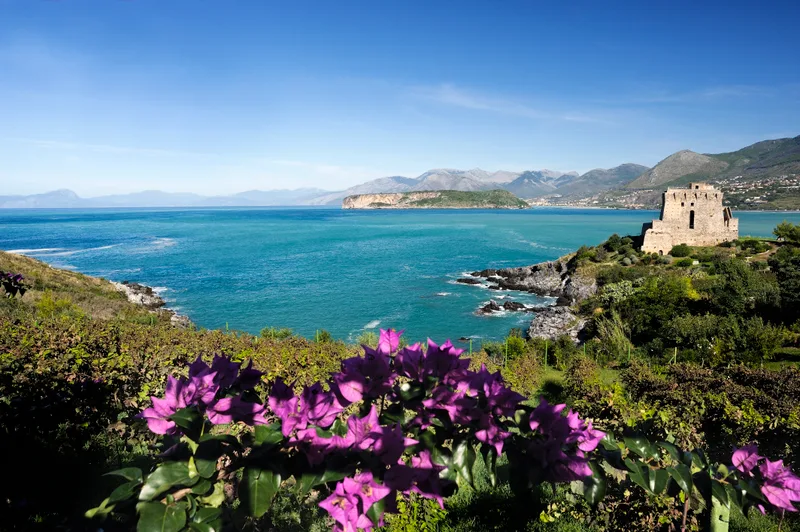
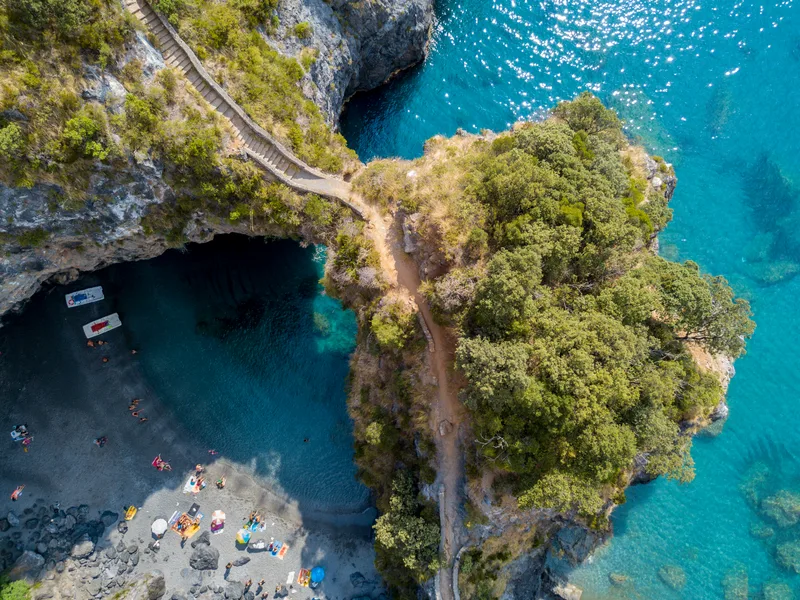
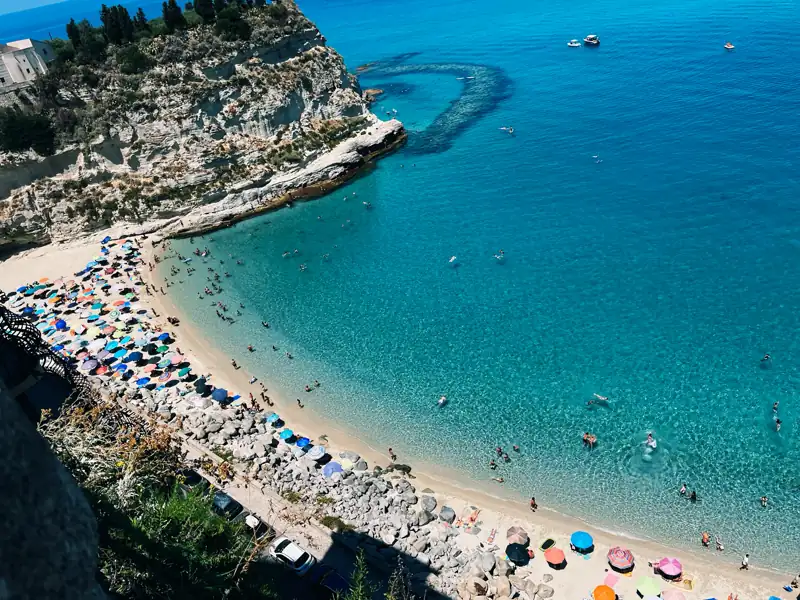
The Tyrrhenian side is the Calabria of postcards, and the easier coast to reach. From north to south it runs through three named stretches. The Riviera dei Cedri, named for the cedro citron (one variety is even called the Diamante citron), has Isola di Dino off Praia a Mare and the Arcomagno arch at San Nicola Arcella. The Costa degli Dei wraps around Tropea, Pizzo and the granite cape of Capo Vaticano. The Costa Viola, about 35 km from the Petrace river to the Strait, drops in high cliffs planted with terraced vineyards, with Palmi, Bagnara Calabra and Scilla along it.
This coast also carries the region's transport. Lamezia Terme airport sits on the Gulf of Sant'Eufemia, the high-speed trains from Rome stop at Lamezia Terme Centrale and continue to Reggio, and the A2 motorway runs just inland. Tropea has its own station on the old coastal line. For the Tropea side in depth, start with the Tropea and Costa degli Dei hub.
The Ionian coast: Greek colonies and open gulfs
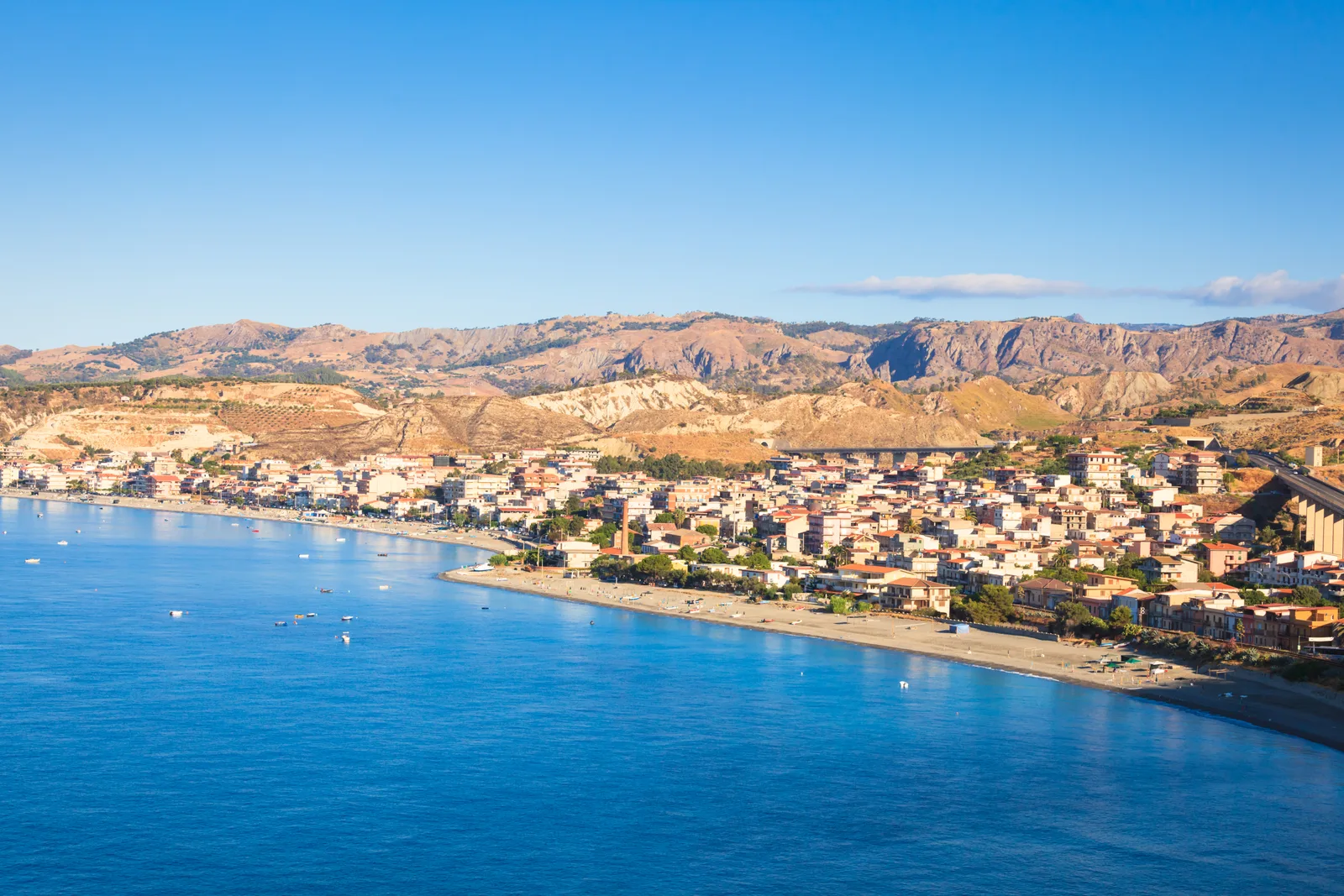
The Ionian side is where the Greek cities of Magna Graecia stood, and it is the better coast for history. Sybaris was founded around 720 BC and destroyed by its neighbor Kroton in about 510 BC; its excavations lie near Sibari. Pythagoras founded his school at Kroton around 530 BC, and at Capo Colonna one Doric column still stands from the temple of Hera. Further south, Locri was founded around 680 BC, and the Riace Bronzes were pulled from the sea off Riace Marina in 1972.
The landscape is broader. Le Castella's fortress stands in the sea inside the Capo Rizzuto marine protected area, the largest in Italy. Soverato faces the Gulf of Squillace, and the hill towns of Gerace, Stilo and Badolato sit a short drive inland. See Magna Graecia sites in Calabria for the archaeology.
Roads and trains: where the two coasts differ most
Transport is the deciding factor for most travelers. On the Tyrrhenian side, the A2 and the main railway make it practical to move between Lamezia, Tropea, Scilla and Reggio without stress.
On the Ionian side, the SS106 is the only coastal artery. Only 82 of its 415 Calabrian kilometers have two lanes in each direction, and 610 people died on it between 1996 and 2020, which is why local papers call it the strada della morte. Upgrades are underway, but the Crotone to Catanzaro stretch is not expected until the late 2030s. The Ionian railway is single track, and electrification works on the Sibari to Catanzaro Lido section were still running in 2025.
If you stay on the Ionian, drive in daylight, allow extra time, or hire a driver. Read driving in Calabria and trains in Calabria before you book.
Sea, light and weather on each side
The biggest everyday difference is the light. On the Tyrrhenian the sun sets over the water, so evenings and aperitivo hour are the coast's best moments. On the Ionian the sun rises over the sea, so mornings are the best time for the beach and for photographs.
Weather differs a little. Winds off the Tyrrhenian bring more rain to the western slopes, while the east coast tends to be drier and warmer. Both coasts are clean by official measures: in 2026 the Ionian held 19 Blue Flag towns, including Soverato, Isola di Capo Rizzuto and Cirò Marina, and the Tyrrhenian held 8, including Tropea, Parghelia and San Nicola Arcella. Compare individual beaches in best beaches in Calabria.
Can you do both coasts in one trip?
Yes, if you give each its own base. Calabria's waist, the Isthmus of Catanzaro, is about 30 km wide, and from Tiriolo or Catanzaro you can see both seas on a clear day. The crossing from Lamezia Terme to the Gulf of Squillace is short; the long drives are along the Ionian shore itself.
A good split for ten days or more is five nights on the Costa degli Dei and four or five near Soverato or Le Castella, with Gerace and Stilo as day trips. In a week or less, choose one coast and do it properly. The Calabria road trip itinerary shows one way to link them, and the Calabria travel guide lists bases on both sides.
Is a hosted week right for you?
Five questions, one minute
Hear when 2027 dates open
One email when 2027 dates open, and an occasional letter from Calabria. Unsubscribe any time.
Questions
Which coast of Calabria has better beaches?
It depends on the kind of beach you like. The Tyrrhenian has the dramatic coves under cliffs at Tropea, Capo Vaticano and the Arcomagno. The Ionian has more open shoreline and more Blue Flag towns, 19 against 8 in 2026, with highlights at Le Castella and Soverato.
Which coast is closer to Lamezia Terme airport?
The Tyrrhenian. The airport sits on the Gulf of Sant'Eufemia, close to the Costa degli Dei. The Ionian shore at the Gulf of Squillace is across the isthmus and also within reasonable reach, but the farther Ionian towns, such as Crotone or Roccella Jonica, are better served by Crotone airport or a long drive.
Is the Ionian coast less touristy than the Tyrrhenian?
For international travelers, yes. ISTAT notes that foreign visitors to Calabria cluster in a few hubs, naming Tropea, which is on the Tyrrhenian. On both coasts, most of the people around you will be Italian holidaymakers.
Where should you stay on the Ionian coast?
Soverato is the most practical base for the central Ionian, with Stilo, Badolato and Gerace within day-trip range. For Le Castella and Capo Colonna, stay around Isola di Capo Rizzuto or Crotone. Either way, plan on a car or driver.
Sources and further reading
- Elenco spiagge Bandiera Blu 2026 (FEE Italia)
- La statale 106 in Calabria (Il Post)
- Ionian Railway (Wikipedia)
- Isthmus of Catanzaro (Wikipedia)
- Costa Viola (Wikipedia Italia)
Checked November 19, 2026. Timetables, prices and opening hours change; confirm before you travel.
Keep reading
Related guides