Calabrian food guide
Calabrian chili peppers
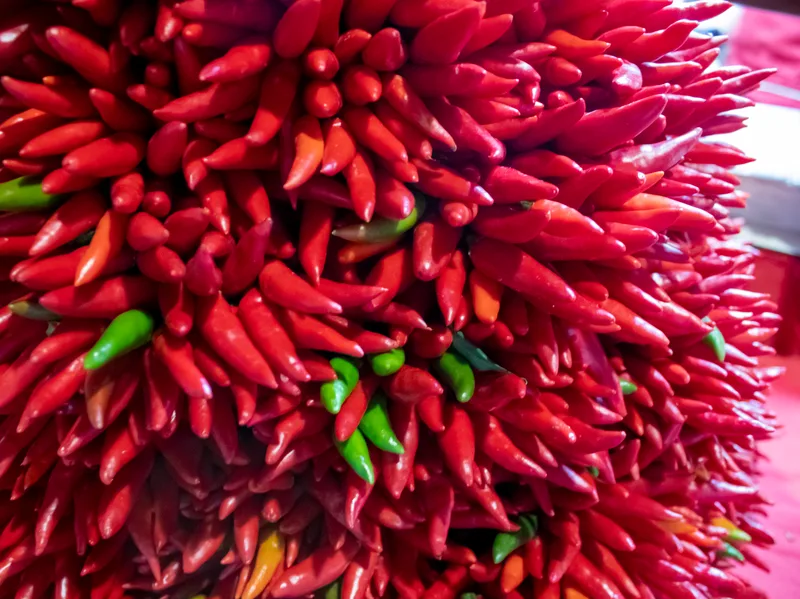
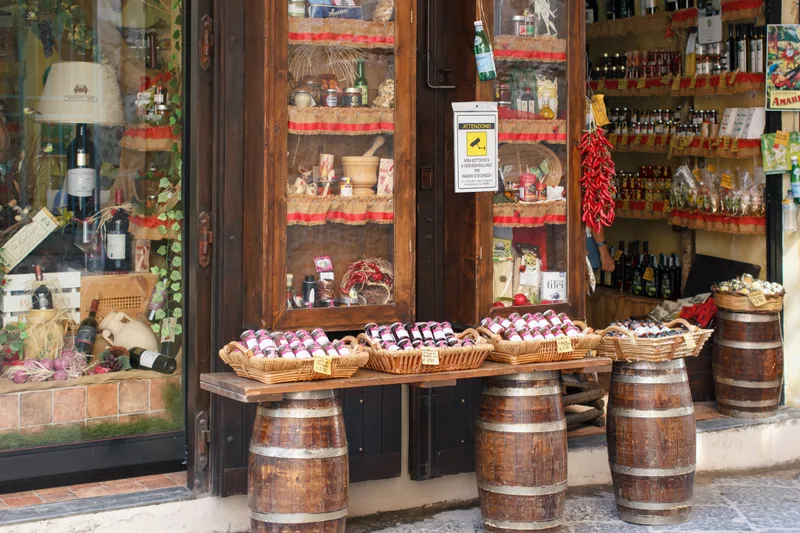
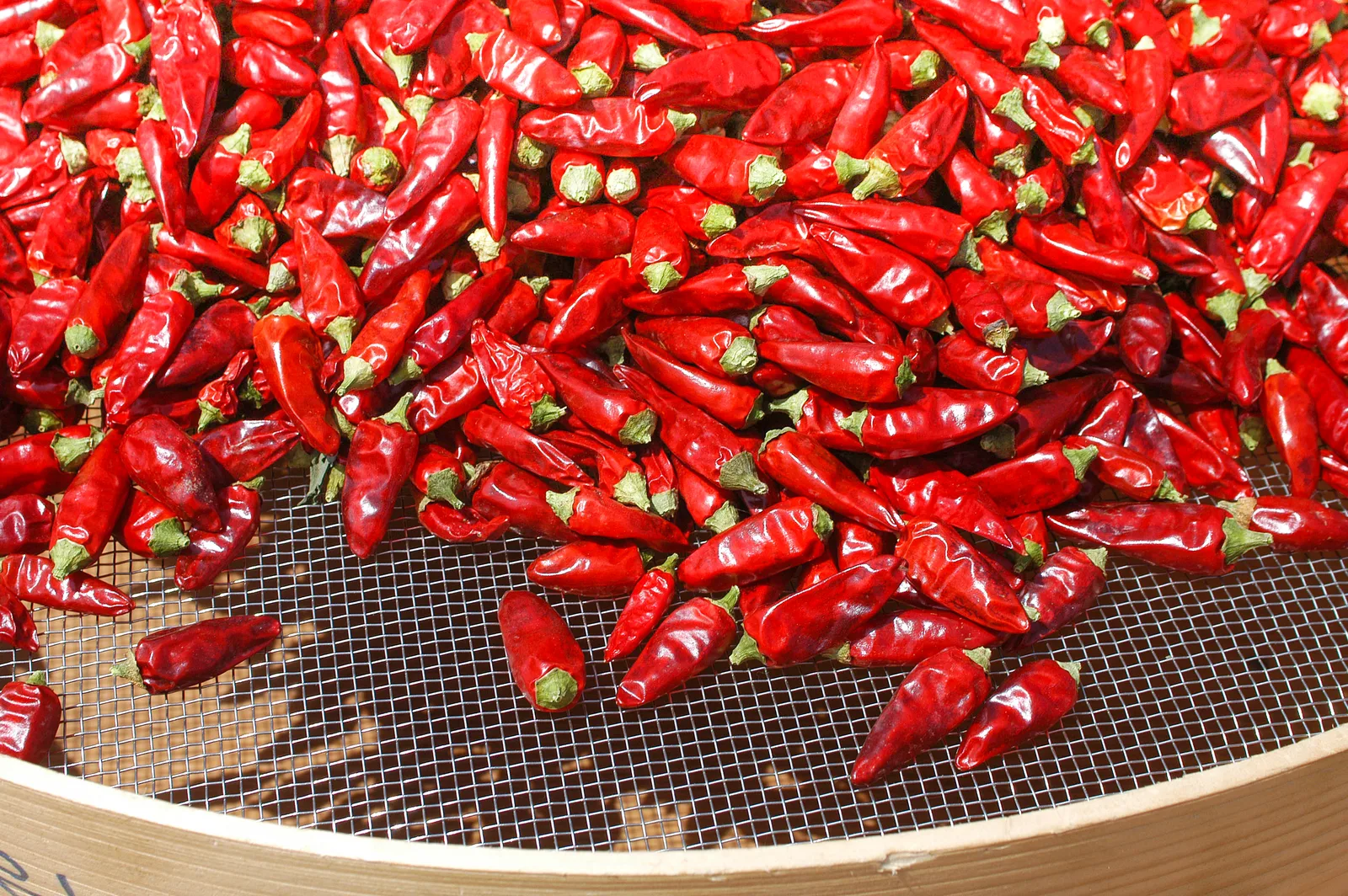
Calabrian chili peppers, peperoncino in Italian and piparedduzzu in dialect, are the small red chilies that season much of Calabrian food, from 'nduja and hot soppressata to pasta sauces and preserves in oil. Since June 2026 they carry EU protection as Peperoncino di Calabria IGP, which covers chilies grown and processed anywhere in the region at a medium-high heat of 5,000 to 70,000 Scoville units. Buy them as dried strings, flakes or round chilies stuffed and preserved in oil.
Peperoncino di Calabria became an EU-protected name in 2026
Calabrian chili gained its own protected geographical indication on 4 June 2026, when the European Commission registered Peperoncino di Calabria IGP (Implementing Regulation 2026/1273). The application was filed in April 2025, and the dossier behind it notes a chili growers' association formed in 2016 in San Marco Argentano, in Cosenza province.
The rules are practical. Growing, drying, stringing and grinding must all happen in Calabria, and the label must say which form you are buying: fresh, dried in strings, dried whole or in pieces, or flaked and powdered. The specification lists 16 permitted varieties, from the local Calabrese and Pizzitano to Ciliegia (cherry), Corno di Capra (goat's horn) and Sigaretta (cigarette).
The dossier behind the IGP traces chili in Calabria to soon after 1493, when the plant arrived from the Americas. It took hold as a stand-in for black pepper, a folk remedy and a symbol of strength.
How hot Calabrian chili is
Calabrian chili is hotter than a jalapeño and far milder than a habanero. The IGP specification sets a range of 5,000 to 70,000 Scoville heat units, wide because it covers many varieties. The common Calabrese type is often quoted at around 30,000, in cayenne territory. Taste a pinch before seasoning, since one batch can run much hotter than the next.
| Chili | Approximate SHU | How it compares |
|---|---|---|
| Jalapeño | 2,500 to 10,000 | Mild to medium |
| Peperoncino di Calabria IGP | 5,000 to 70,000 | Medium-high, varies by variety |
| Calabrese type (average) | About 30,000 | Within cayenne's 25,000 to 50,000 |
| Habanero | 100,000 to 350,000 | Much hotter |
What to order: where chili shows up on a Calabrian menu
Chili is everywhere in Calabria, but it is rarely the whole point of a dish. It sits inside cured meats, preserves and sauces. These are the places you will meet it.
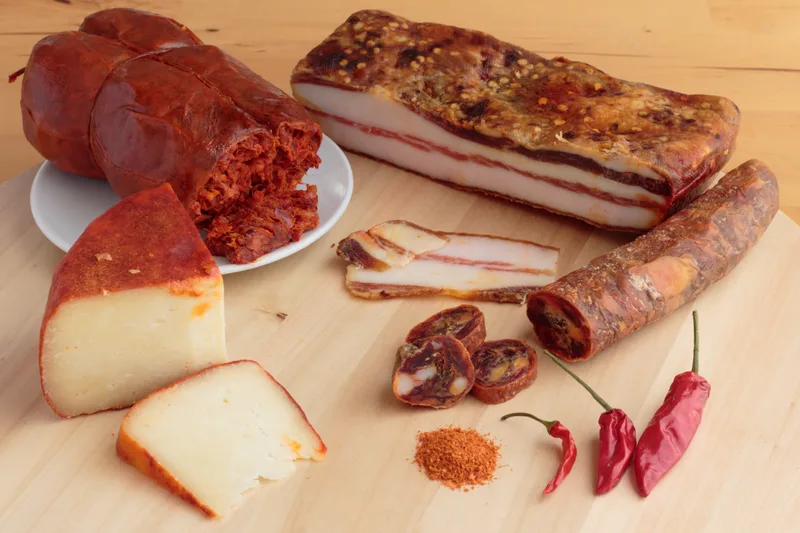
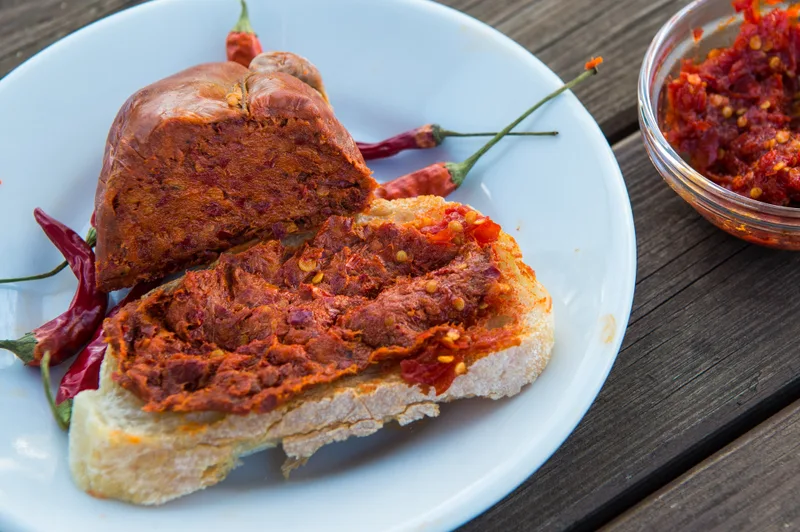
- 'Nduja: about a third chili by weight, the region's most famous use. See what is nduja.
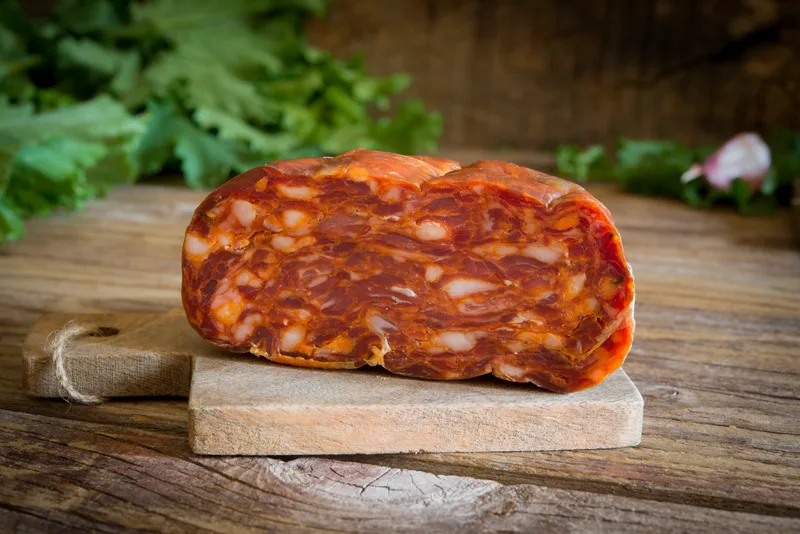
- Salami and sausage: Calabrian salsiccia and soppressata come in mild (dolce) and hot (piccante) versions, so say which you want. More in Calabrian cured meats.
- Peperoncini ripieni: round chilies stuffed and preserved in oil, a traditional antipasto.
- Tritato di peperoncino: finely chopped chili in oil, spooned onto bread, pasta or grilled meat.
- Sardella or rosamarina: a red fish paste from the Ionian coast, made with chili, salt and wild fennel seed.
- Frise and tarallini al peperoncino: chili-flecked rusks and small rings, good with an aperitivo.
- Chili oil: olive oil steeped with chili, a common condiment for pizza and pasta. The Calabrian chili oil recipe shows how to make it.
Diamante and Maierà are the capitals of chili culture
The town most tied to Calabrian chili is Diamante, on the northern Tyrrhenian coast about 155 km and two and a half hours by car from Tropea. Journalist Enzo Monaco founded the Accademia Italiana del Peperoncino there in 1994, and the town has hosted a chili festival since 1992. For dates and what happens, read the Peperoncino Festival in Diamante.
Eight kilometers from Diamante, the village of Maierà keeps a Museo del Peperoncino in its ducal palace, described in the IGP dossier as the only museum devoted to the chili. Its own site says visits are by reservation, so call ahead. Smaller events include a pepper festival in Castelsilano in August and a chili fair in Cerchiara di Calabria on the third Saturday of September.
How to buy Calabrian chili and get it home
Buy dried chili in strings or whole pods, and check the color and the label. Good dried Calabrian chili is brick red to deep carmine and brittle. The IGP caps moisture at 15%, so leathery, faded or dusty pods are past their best.
- Strings (collane): IGP strings run from 20 to 120 cm and carry a label on the line. They pack flat and make a good gift.
- Flakes and powder: look for "Peperoncino di Calabria IGP", the EU PGI logo and the form, such as "essiccato a scaglie" (dried flakes).
- In oil: jars of stuffed chilies or tritato are heavy and can leak, so wrap them well in checked luggage.
- Village chilies: Spilinga, the home of 'nduja, has its own listed traditional chili, Peperoncino di Spilinga.
- Customs: declare all food when you land. Rules are in can you bring Italian food back to the US, and gift ideas in Calabrian food souvenirs to bring home.
Planning Calabria?
Hear when 2027 dates open
A small group of women, one week in Tropea, everything arranged. Join the list for first word on dates and an occasional letter from Calabria.
One email when 2027 dates open, and an occasional letter from Calabria. Unsubscribe any time.
Questions
Can you substitute ordinary red pepper flakes for Calabrian chili?
In a pinch, yes, since the common Calabrese type sits in the cayenne range. Calabrian IGP chili can run anywhere from 5,000 to 70,000 SHU depending on the variety, so adjust the amount by taste rather than by the recipe.
Is the Calabrian chili sold in US stores from Calabria?
Not always. Only chilies labeled Peperoncino di Calabria IGP are guaranteed to be grown and processed in Calabria. Words like "Calabrian-style" or "Calabrian chili" alone do not tell you where the peppers grew.
Do Calabrian dishes all taste very spicy?
No. Many dishes use chili as a background note, and cured meats come in mild and hot versions. Ask "è piccante?" (is it spicy?) when you order, and choose dolce for the mild version.
What is piparedduzzu?
It is a dialect name for the small Calabrian chili, used locally alongside the Italian peperoncino.
Sources and further reading
- EUR-Lex: Commission Implementing Regulation (EU) 2026/1273 registering Peperoncino di Calabria (PGI)
- EUR-Lex: Publication of the Peperoncino di Calabria application, OJ C/2026/1101
- Italia.it: Accademia Italiana del Peperoncino, Diamante
- Museo del Peperoncino, Maierà
- Wikipedia (Italian): Peperoncino calabrese
Checked November 19, 2026. Timetables, prices and opening hours change; confirm before you travel.
Keep reading
Related guides