Calabrian food
Calabrian cured meats
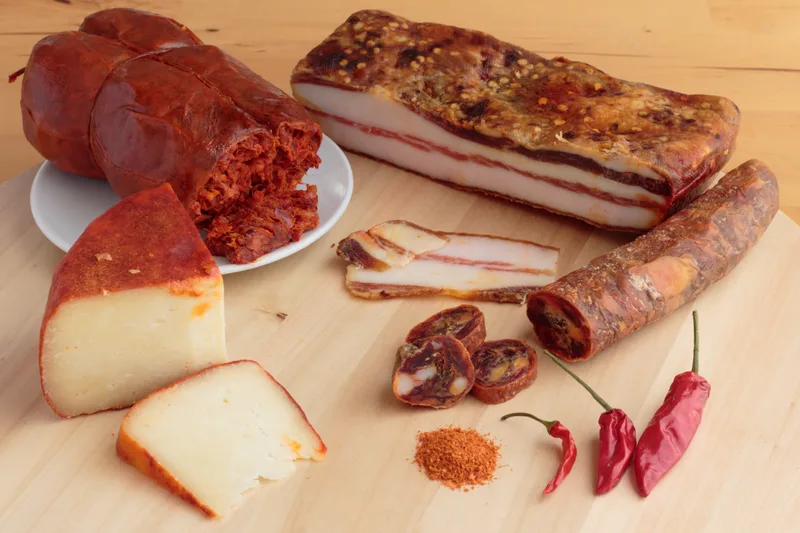
Four Calabrian cured meats carry DOP protection, registered in 1998: Soppressata di Calabria, Capocollo di Calabria, Salsiccia di Calabria and Pancetta di Calabria. All four come from pigs raised in Calabria and are cured there, seasoned with black pepper and often Calabrian chili. Alongside them sit the spreadable nduja of Spilinga and a long list of village salumi, including cuts from the native black pig.
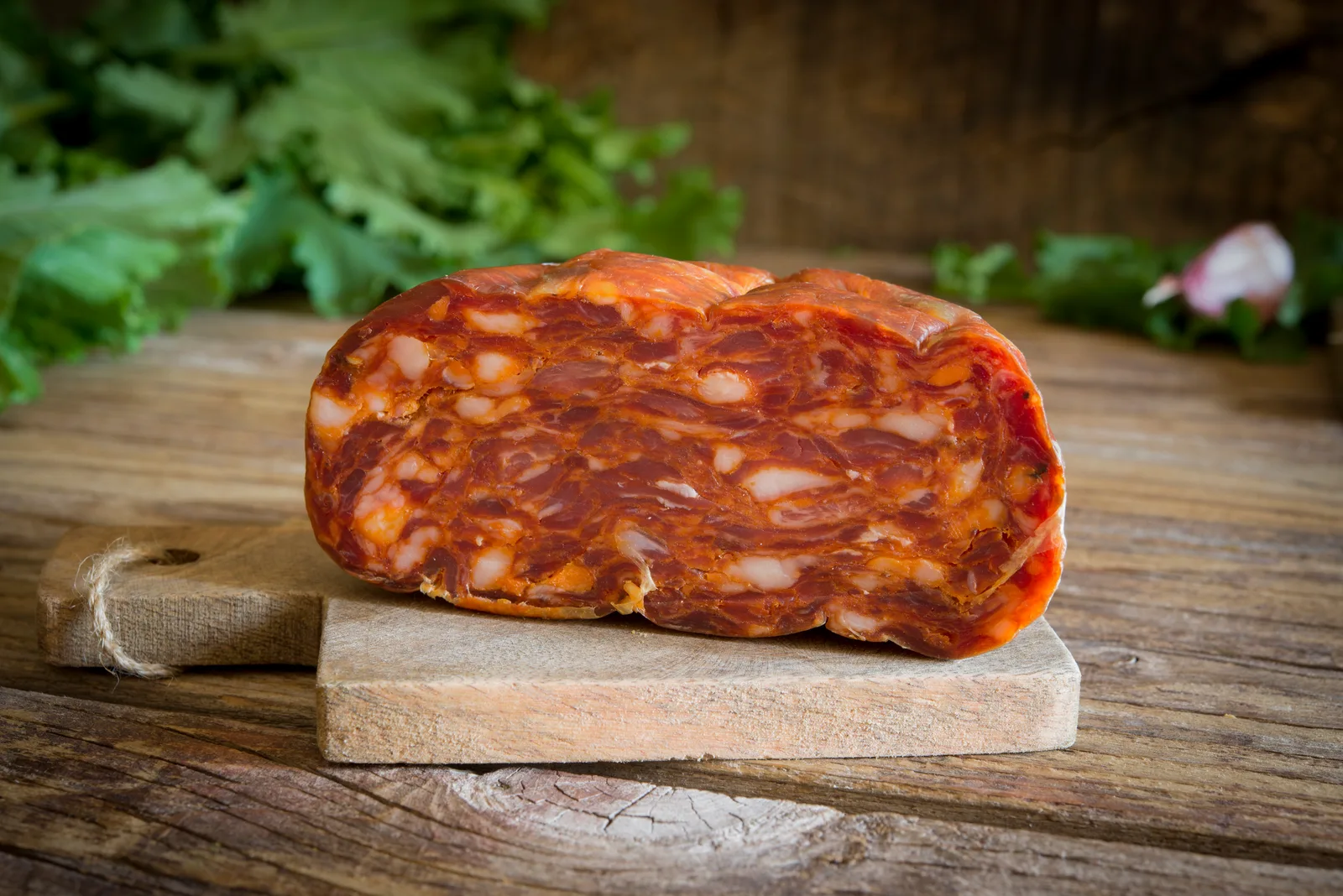
Four Calabrian salumi share one DOP system and one set of pig rules
Soppressata, capocollo, salsiccia and pancetta di Calabria were registered as DOP products on January 20, 1998, and are overseen by a single consortium, the Consorzio di Tutela Salumi di Calabria DOP. The same rules on the animals apply to all four.
The pigs may be born in Calabria or the neighboring southern regions (Basilicata, Puglia, Campania and Sicily), but they must be raised in Calabria from no later than four months of age, then slaughtered and processed in Calabria. Permitted breeds are the local Calabrese pig, Large White and Italian Landrace.
| Salume | Cut | Key seasoning | Shape | Minimum cure |
|---|---|---|---|---|
| Soppressata di Calabria | Lean shoulder, ham and tenderloin, coarsely chopped, 4 to 15% fat | Salt, black pepper, wine; hot or sweet red pepper | Slightly flattened cylinder, 10 to 18 cm long | 45 days |
| Capocollo di Calabria | Boneless upper loin and neck, 3.5 to 5.5 kg | Salt, wine vinegar, whole black peppercorns | Whole muscle in natural casing, hand-tied | 100 days from salting |
| Salsiccia di Calabria | At least 50% shoulder plus underrib, 6 to 20% back fat | Black pepper, wine, fennel seed; hot or sweet pepper | Chain links or a U shape | 30 days |
| Pancetta di Calabria | Belly with rind, trimmed to a 3 to 4 kg rectangle | Salt, wine vinegar, optional chili coating | Flat slab, 3 to 5 cm thick | 30 days |
Soppressata is the pressed salame, and it comes hot, sweet or plain
Soppressata di Calabria is a coarse-ground salame stuffed into perforated pork casing, hand-tied into a slightly flattened cylinder, then air-dried for at least 45 days. The DOP allows three versions: piccante with hot red pepper or hot pepper cream, dolce with sweet red pepper, and bianca with neither.
Village versions go beyond the DOP. The regional list of traditional products includes a smoked soppressata (supprizzata 'ffumicata) and the soppressata of Decollatura, in the hills of Catanzaro province.
Capocollo and pancetta are whole cuts cured with vinegar and pepper
Capocollo di Calabria is the most patient of the four: a boneless cut from the upper loin, salted for 4 to 10 days, washed, massaged with wine vinegar, pressed, coated with whole black peppercorns and cured for at least 100 days at 14 to 16°C. It keeps a 3 to 4 mm layer of fat that stays soft through curing. Sliced thin, it is silky and gently peppery; it is the cut many Americans know as capicola.
Pancetta di Calabria is salted dry for 4 to 11 days, rinsed, moistened with wine vinegar and, if the maker chooses, coated with ground chili, a step called impepatura, before at least 30 days of curing. If it is sold sliced or in portions rather than whole, the cutting must happen in Calabria.
Salsiccia di Calabria is dried sausage, sold in chains
Salsiccia di Calabria is a cured sausage, not a fresh one: shoulder and underrib with back fat, seasoned with black pepper, wine and fennel seed, stuffed into natural casing and dried for at least 30 days. It hangs in its typical chain (catenella) or a U shape, and like soppressata it comes piccante, dolce or bianca.
Cut it in rounds for an antipasto. The fennel seed is what separates it from the soppressata on the same board.
Beyond the DOP four: nduja, black pig and village salumi
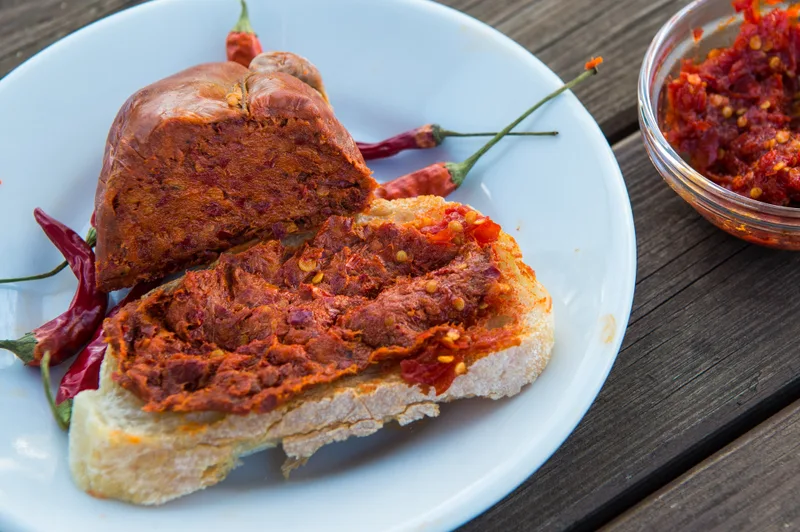
Calabria's official list of traditional food products names 28 meat products, and some of the best are not DOP at all. The most famous is nduja, the soft, spreadable chili salume of Spilinga, near Tropea; what nduja is and how to eat it has its own guide.
- Black Calabrian pig (suino nero di Calabria): the native dark-skinned breed, whose meat and prosciutto are both on the traditional products list.
- Guanciale and lardo (u lardu): cured cheek and back fat, used in cooking as much as eaten on bread.
- Frittole: pork rind and meat boiled slowly in pork fat.
- Prosciutto crudo di San Lorenzo Bellizzi and salame crudo di Albidona: village cures from the far north of the region.
How to order and buy Calabrian salumi
In a restaurant, order an antipasto calabrese or a tagliere of salumi and cheese, and say piccante or dolce if you care about heat. At a salumeria, ask for the DOP versions by name and for slicing (affettato) on the spot.
Enjoy them in Italy, because they cannot come home with you to the US: USDA APHIS bars travelers from bringing in salami and cured hams from Italy, vacuum-packed or not. Details are in can you bring Italian food back to the US. If you eat gluten-free, note that Italy's celiac association lists most salumi as at-risk foods to check, covered in gluten-free travel in Calabria.
Planning Calabria?
Hear when 2027 dates open
A small group of women, one week in Tropea, everything arranged. Join the list for first word on dates and an occasional letter from Calabria.
One email when 2027 dates open, and an occasional letter from Calabria. Unsubscribe any time.
Questions
What is the difference between soppressata and salami?
Soppressata is a type of salame. The Calabrian DOP version uses coarsely chopped lean shoulder, ham and tenderloin with a little fat, and is shaped into a slightly flattened cylinder before curing at least 45 days. Ordinary salame has no fixed cut, shape or curing time.
Is Calabrian soppressata always spicy?
No. The DOP rules allow three versions: piccante with hot red pepper, dolce with sweet red pepper, and bianca with neither. Spicy is the classic, so ask for dolce if you prefer it mild.
Why is Calabrian salami stopped at US customs?
No. USDA APHIS says travelers may not bring cured hams or salami from Italy into the United States; they can only enter as certified commercial shipments. CBP adds that most foreign meat products are not admissible, so treat soppressata, salsiccia, capocollo and nduja as off-limits, even sealed.
What is the Calabrese pig?
It is the region's native black pig, one of the breeds allowed for the four DOP salumi alongside Large White and Italian Landrace. Its meat and its prosciutto are listed among Calabria's official traditional food products.
Sources and further reading
- Qualigeo: Soppressata di Calabria DOP
- Qualigeo: Capocollo di Calabria DOP
- Qualigeo: Salsiccia di Calabria DOP
- Qualigeo: Pancetta di Calabria DOP
- Wikipedia (Italian): Prodotti agroalimentari tradizionali calabresi
Checked November 19, 2026. Timetables, prices and opening hours change; confirm before you travel.
Keep reading
Related guides