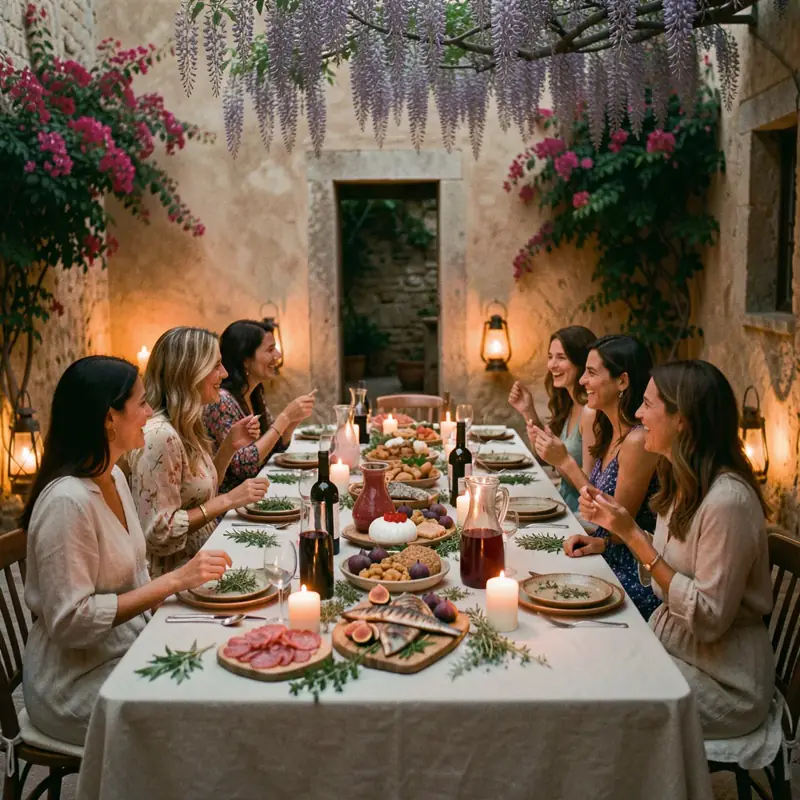
Calabrian food
Calabrian cheeses
Calabria's essential cheeses are three DOPs: Caciocavallo Silano, a stretched-curd cow's milk cheese from the Sila and the southern Apennines; Pecorino Crotonese, a sheep's milk cheese shaped in baskets around Crotone; and Pecorino del Monte Poro, the sheep's cheese of the plateau behind Tropea, protected since 2020. Beyond them, look for caciocavallo podolico, butirro, giuncata and goat cheeses from the Aspromonte.
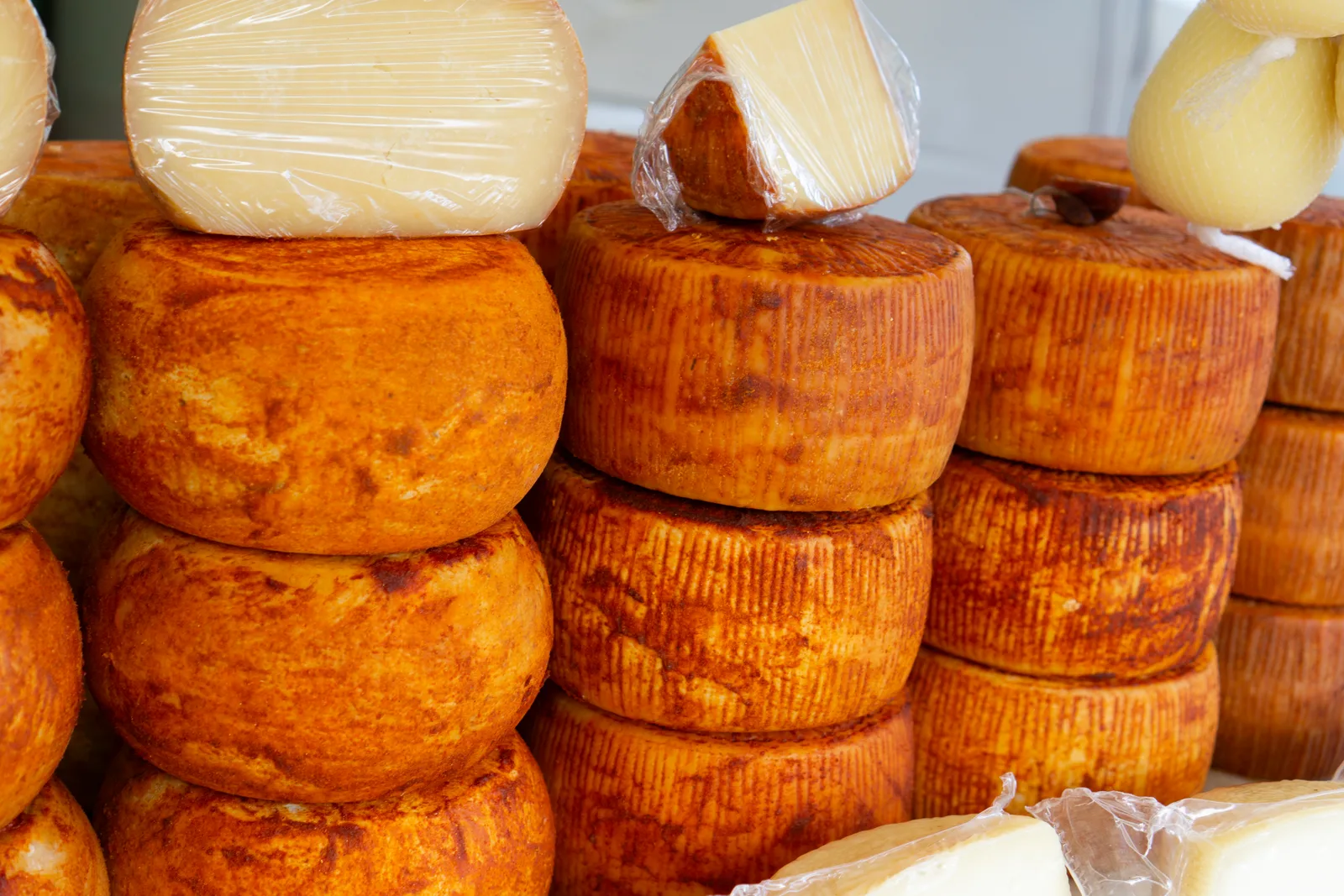
Calabria has three DOP cheeses, each from a different landscape
The three protected cheeses map Calabria's uplands: cow's milk on the Sila plateau and inland hills, sheep's milk on the Crotone hills and on the Monte Poro. DOP status means the milk, the method and the place are fixed by an EU-registered specification, and each wheel is identifiable.
| Cheese | Milk | Where | Ages and types | EU registration |
|---|---|---|---|---|
| Caciocavallo Silano | Whole cow's milk | Inland Calabria (Cosenza, Crotone, Catanzaro, Vibo Valentia) and parts of four other southern regions | At least 30 days; Extra 4+ months; Gran Riserva 9+ months | 1996 |
| Pecorino Crotonese | Whole sheep's milk | Crotone province and parts of Catanzaro and Cosenza | Fresco; Semiduro 60 to 90 days; Stagionato over 90 days; grating | 2014 |
| Pecorino del Monte Poro | Raw whole sheep's milk | 27 communes of Vibo Valentia province | Fresco 20 to 60 days; Semistagionato to 6 months; Stagionato 6 to 24 months | 2020 |
Caciocavallo Silano is stretched, tied in pairs and hung to age
Caciocavallo Silano is a pasta filata cheese: the curd is stretched in water at 80 to 85°C, shaped by hand, brined, then tied in pairs and hung for at least 30 days. The finished cheese is oval or a truncated cone, with or without a small knob of a head, and shows the marks of the cords it hung from. Wheels typically weigh 1 to 2.5 kg.
Young caciocavallo is mild and slightly sweet and melts in the mouth; with age it turns sharp and savory, close to an aged southern provolone. The name means "horse cheese," and the usual explanation is that the paired cheeses hang astride a pole, a cavallo. Real DOP wheels are heat-branded with the logo and the producer's number and carry a numbered consortium label.
Caciocavallo Silano is made across five southern regions, so a Calabrian wheel is not guaranteed. Ask where it was made, or look for producers in the Sila or the inland hills of Cosenza, Crotone, Catanzaro or Vibo Valentia.
Pecorino Crotonese is shaped in baskets and tastes of hay and hazelnut
Pecorino Crotonese is made only from whole sheep's milk, curdled with kid rennet paste at 36 to 38°C and pressed into traditional basket molds. The fresh cheese keeps the basket pattern on its thin rind and is tender and sweet with a light tang.
Semiduro, aged 60 to 90 days, is compact and slightly spicy under a thicker brownish rind. Stagionato, aged beyond 90 days, is intense, with aromas of sheep's milk, hay, field herbs, hazelnut and a little smoke, and the oldest wheels are grated over pasta. Fresh cheeses weigh 0.5 to 3 kg; the aged wheels can reach 15 kg.
Pecorino del Monte Poro is the cheese of the plateau above Tropea
Pecorino del Monte Poro is the local cheese of the Tropea area, made from raw sheep's milk in 27 communes of Vibo Valentia province centered on the Poro plateau, and registered as a DOP in July 2020. The sheep graze semi-free, the milk comes from two milkings, and the curd is broken to the size of a grain of rice before it goes into molds.
Expect a creamy, nutty, fragrant paste with notes of wild flowers, Mediterranean scrub and hay. Fresco is soft and mild; Semistagionato firms up; Stagionato, aged up to two years, turns sharper and saltier. Wheels range from about 300 grams to 10 kg. It is the cheese traditionally grated over fileja, one of the traditional Calabrian recipes of Vibo Valentia province.
Farmhouse cheeses worth asking for
Calabria's list of traditional food products names more than twenty cheeses, and the smaller ones are where village cooking shows. None of these is DOP, so quality depends on the maker.
- Caciocavallo podolico: made only from the milk of Podolica cattle, the old local breed that caciocavallo was originally made from.
- Butirro: a shell of stretched curd, like scamorza, wrapped around a core of butter.
- Giuncata: an unsalted fresh cheese named after the rush (giunco) basket that shapes it.
- Caprino dell'Aspromonte: goat's milk cheese from the mountains above Reggio Calabria.
- Pecorino del Pollino and Pecorino della Locride: sheep's cheeses from the far north and the Ionian south.
How to eat, buy and carry Calabrian cheese
Order cheese as part of an antipasto with salumi and preserved vegetables, or ask for it grated over pasta; for a match, Greco di Bianco sweet wine is a suggested partner for aged pecorino. A red from the Calabrian wine guide, such as a Cirò, suits aged caciocavallo.
At a shop, ask for the DOP version by name and have aged cheese vacuum-packed. Solid cheeses such as aged pecorino and caciocavallo are generally allowed into the US if declared, while soft, spoonable ricotta is not: check what Italian food you can bring back to the US before you shop. Vegetarians should note that all three DOPs use animal rennet.
Planning Calabria?
Hear when 2027 dates open
A small group of women, one week in Tropea, everything arranged. Join the list for first word on dates and an occasional letter from Calabria.
One email when 2027 dates open, and an occasional letter from Calabria. Unsubscribe any time.
Questions
Is caciocavallo the same as provolone?
They are cousins: both are stretched-curd cow's milk cheeses, and aged caciocavallo tastes similar to an aged southern provolone. Caciocavallo is hung in pairs to age, and Caciocavallo Silano has its own DOP rules on milk, area and aging.
What is the local cheese of the Tropea area?
Pecorino del Monte Poro. It is made from raw sheep's milk in 27 communes of Vibo Valentia province, on and around the Poro plateau that rises behind Tropea. Try it fresh in spring and aged in autumn.
What do fresco, semiduro and stagionato mean?
They are aging stages. Fresco is young and soft, semiduro or semistagionato is semi-hard after roughly two to six months, and stagionato is fully aged and sharp. Each DOP sets its own exact day counts.
Will aged pecorino or caciocavallo clear US customs?
Solid cheeses, including aged pecorino and caciocavallo, are generally allowed by USDA APHIS if they contain no meat and you declare them. Liquid or spoonable cheeses such as ricotta are not allowed. Keep the label or receipt as proof of origin.
Sources and further reading
- Qualigeo: Caciocavallo Silano DOP
- Qualigeo: Pecorino Crotonese DOP
- Qualigeo: Pecorino del Monte Poro DOP
- EUR-Lex: Regulation (EU) 2020/974 registering Pecorino del Monte Poro PDO
- Wikipedia (Italian): Prodotti agroalimentari tradizionali calabresi
Checked November 19, 2026. Timetables, prices and opening hours change; confirm before you travel.
Keep reading
Related guides